Cctv newsThe "Rural Revitalization Strategy", which first appeared in the report of the 19th National Congress of the Communist Party of China, has drawn a magnificent and beautiful blueprint for nearly 600 million rural people in China.
The report of the 19th National Congress of the Communist Party of China pointed out that it is necessary to give priority to the development of agriculture and rural areas, establish and improve the system, mechanism and policy system of urban-rural integration development, and accelerate the modernization of agriculture and rural areas in accordance with the general requirements of industrial prosperity, ecological livability, rural civilization, effective governance and affluent life.
Solving the "three rural issues" is the top priority of the whole party’s work
According to the report of the 19th National Congress of the Communist Party of China, the rural revitalization strategy should be implemented, including adhering to the priority development of agriculture and rural areas, consolidating and improving the basic rural management system, keeping the land contract relationship stable and unchanged for a long time, deepening the reform of rural collective property rights system, ensuring national food security, and building modern agricultural industrial system, production system, management system and other aspects and levels of deployment.
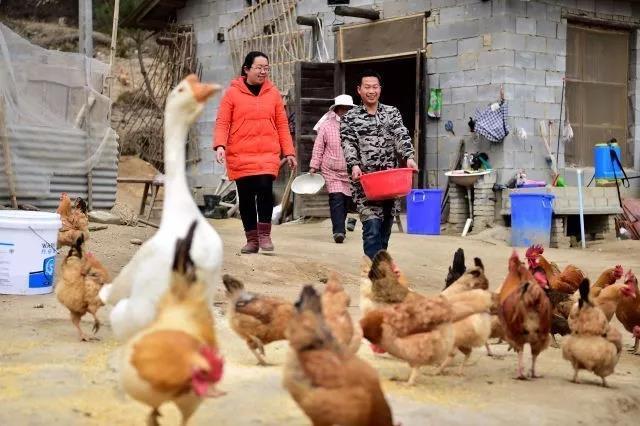
△ On March 6, 2017, Wang Zhen (left), the first secretary of Heping Village, Heping Township, Yuexi County, Anhui Province, and the captain of the poverty alleviation team in the village, learned about the situation in a chicken farm run by poor households.
The problem of farmers in agriculture and rural areas is a fundamental issue related to the national economy and people’s livelihood. Since the founding of New China, the Communist Party of China (CPC) has always regarded solving the "three rural issues" as the top priority of the whole party’s work.
The report outlines the priorities and main directions of the work on agriculture, rural areas and farmers in the next stage from the aspects of consolidating and improving the rural basic management system, deepening the reform of rural collective property rights system, ensuring national food security, building a modern agricultural system, promoting the integration of rural primary, secondary and tertiary industries, increasing farmers’ income, and building a rural governance system. It is concise, but the system is comprehensive and the context is clear, and arrangements are made from three aspects: agriculture, rural areas and farmers.
Without poverty alleviation in rural areas, there will be no rural revitalization.
The urbanization rate of China has risen from 47.5% in 2010 to 57.4% by the end of 2016. However, compared with cities, there is a big gap in industrial development, ecological protection and social governance in rural areas of China, which has become a short board for China to achieve the goal of "two hundred years". The poverty alleviation of rural poor people is related to the realization of the goal of comprehensive poverty alleviation.
"Without poverty alleviation in rural areas, there will be no rural revitalization." Fan Xiaojian, director of the Expert Advisory Committee of the Leading Group for Poverty Alleviation and Development of the State Council, said that rural revitalization was promoted to a strategic level at the 19th National Congress, which can greatly raise the standards and requirements of agricultural and rural development in China, and provide long-term policy support for solving the poverty-stricken rural population’s poverty alleviation and well-off life, and realizing agricultural and rural modernization.
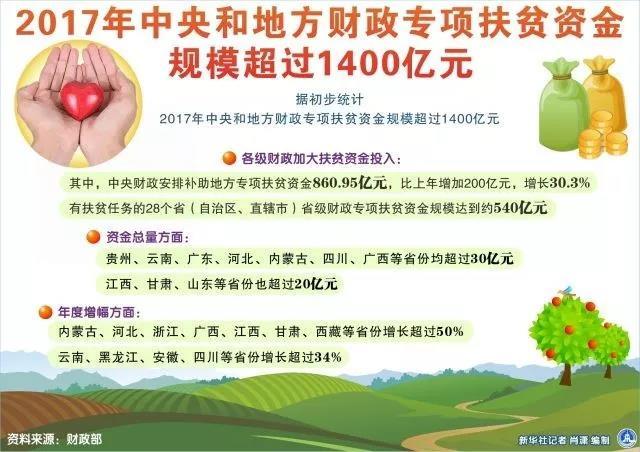
There are about 40 million poor people in rural areas in China. After making decisive progress in the fight against poverty, the Supreme Leader emphasized in the report of the 19th National Congress that by 2020, the rural poor will be lifted out of poverty under the current standards in China, and all poverty-stricken counties will be stripped of their hats, so as to solve the overall regional poverty and truly get rid of poverty.
Fan Xiaojian said that the key to tackling poverty in the next stage lies in greater capital investment and the "accuracy" of the aid policy. At the same time, through poverty alleviation through education and health, the intergenerational transfer of poverty will be blocked, and the poor households who have been lifted out of poverty will continue to follow up and observe to curb the phenomenon of returning to poverty.
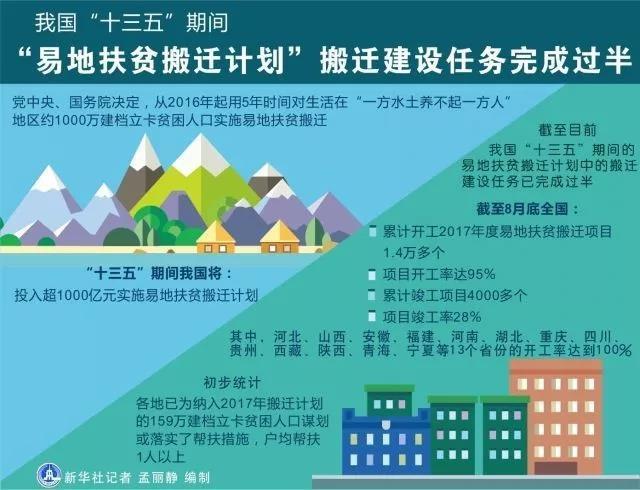
△ China’s "Ex situ Poverty Alleviation and Relocation Plan" has been more than half completed during the "Thirteenth Five-Year Plan" period (data chart)
After the second round of land contract expires, it will be extended for another 30 years to give farmers a "reassurance"
As an important part of the rural revitalization strategy, the policy of "extending the second round of land contract for another 30 years after its expiration" in the report of the 19th National Congress has reassured many farmers in China.
Zheng Fengtian, a professor at the School of Agriculture and Rural Development of Renmin University of China, said that this is the first time that the Communist Party of China (CPC) has clearly put forward the land contracting period after the second round of contracting, which ensures the stability and continuity of the policy.
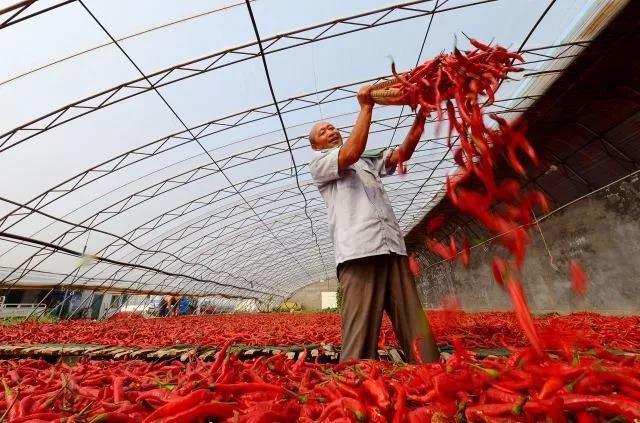
"The news of the extension of land contractual management rights reassured us that we can finally do a big job!" Wuli village, hanshan county, Anhui Province, a large fruit tree planter sent be in heaven on behalf of his family.
In 2013, Daijiafa transferred 1,800 mu of land in wuli village, and planned to carry out diversified operations of growing grain, fruit trees and camellia oleifera, but the benefits of fruit trees and camellia oleifera will not be seen for 10 years. The uncertain policy after the expiration of this round of land contract made farmers afraid to sign long-term contracts, which made it difficult for them to realize the diversified modern agricultural development plan.
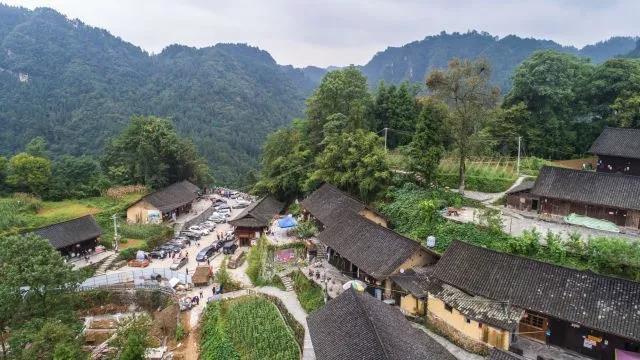
△ Eighteen-hole Village, Shuanglong Town, Huayuan County, Xiangxi Tujia and Miao Autonomous Prefecture, Hunan Province, photographed on September 21, 2017.
It is clear that after the second round of land contract expires and is extended for another 30 years, Daijiafa plans to increase the scale of cooperative operation to 5000 mu next year.
Zheng Fengtian said that the report of the 19th National Congress emphasized keeping the contract relationship of land stable and unchangeable for a long time, and made it clear that the second round of land contracting would be extended for another 30 years after its expiration, which would be conducive to safeguarding farmers’ rights and interests, promoting the orderly circulation of rural land and strengthening the confidence of agricultural investors.
"It is foreseeable that the rural revitalization strategy will actually benefit agriculture, rural areas and farmers, narrow the gap between urban and rural areas, and promote the integrated development of urban and rural areas, for ‘ Two hundred years ’ Lay the foundation for the realization of the goal of struggle. " Li Guoxiang said.

关于作者