标签归档 上海419

Why are the illegal online celebrity people so "tenacious" when they put on "new vests" for live webcasting?

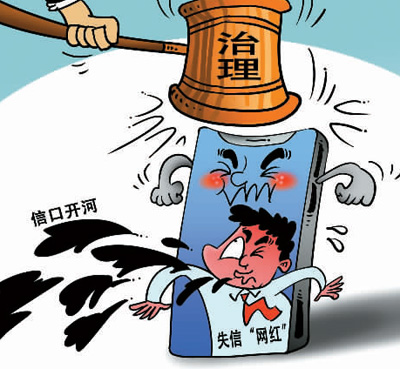
  In recent years, with the increasing supervision, the illegal and illegal phenomena such as obscenity, violence and blood, and fraudulent donation in live webcasts have been greatly reduced. However, it should not be ignored that some webcasting chaos has now been replaced with "new vests", and unhealthy or even illegal content still appears in the webcast room from time to time.

  Acts such as hitting the "edge ball" still exist

  Not long ago, the Public Security Bureau of Rongxian County, Zigong City, Sichuan Province issued a notice saying that since 2018, female anchor Tang Moumou has filmed fishing videos wearing bright exposure and red scarf in farmland in order to gain eyeballs and increase the number of fans and videos, and uploaded four edited videos on the Aauto Quicker platform with the account of "Yibin Yingying", and the number of videos played has reached more than 3 million times. According to the Public Security Administration Punishment Law, the police detained Tang for 12 days and fined 1000 yuan, ordering him to delete relevant videos.

  Zhu Wei, deputy director of the Communication Law Research Center of China University of Political Science and Law, pointed out that Tang’s behavior is one of the most common chaos in the current webcast — — Spread vulgar culture.

  "The current webcast chaos is very different from that of previous years. Compared with illegal acts such as pornography and violence, it is now more chaos such as infringing on the privacy of others, promoting feudal superstitions and spreading vulgar culture." Zhu Wei said, "Vulgar behaviors such as female anchors wearing red scarves are more common in webcasts. In fact, this phenomenon has existed almost since the appearance of webcasting. Compared with pornography and other illegal acts, this kind of behavior mainly violates public order and good customs, and is more in a relatively obscure gray area. "

  Exposed clothes, sexually suggestive actions, live broadcast of foul language, and public ridicule of the Nanjing Massacre … … In recent years, news about the misconduct of webcasting is common in newspapers. These behaviors are not exactly the same as illegal behaviors, but essentially a kind of "edge ball" behavior, which also makes some anchors take advantage of it.

  In addition to playing "edge ball", the boundary of webcasting has also caused controversy. In 2018, some anchors used the network car as the carrier to broadcast the order taking process without the customer’s knowledge, and the live broadcast targets were mostly female passengers; In April this year, Chen Mou, a star, was broadcast live by an anchor in Betta when she was shopping with her children. Chen Mou was very dissatisfied with this and angered the anchor. Many news events have brought the chaos of webcasting into people’s field of vision again and again.

  Interests drive some anchors to exploit loopholes.

  According to the 43rd Statistical Report on the Development of Internet in China, as of December 2018, the number of live webcast users in China reached 397 million. Nowadays, users have basically developed the habit of watching live broadcasts, with high viewing frequency and strong willingness to pay. In addition, with the rise of mobile live broadcast platforms, the threshold for live broadcasts has been greatly lowered, and it has become possible for everyone to broadcast live and everything can be broadcast live.

  Some insiders believe that the huge profit margin and market of webcasting have attracted the influx of venture capital and live broadcast practitioners, which has also caused a mixed environment of webcasting.

  In recent years, webcasting platforms have sprung up one after another, so many people have entered the live broadcast industry and become professional or part-time anchors. However, the low threshold of live broadcast makes it unnecessary for anchors to undergo strict examination of their qualifications and qualities. Driven by the huge profits that live webcasting can bring, some anchors have no rules and legal awareness, and constantly gain attention by breaking through the legal bottom line and infringing on public order and good customs, and then get rewards from fans and even seek huge profits. However, some popular anchors have gradually ignored the responsibility of guiding the public to establish correct values after receiving a large number of fans. Previously, the network anchor Tianyou was banned by the National Network Information Office for describing in detail all kinds of feelings after drug abuse in the form of rap in the live broadcast.

  At the same time, the gray area provides space for the breeding of network chaos. At present, there are no clear laws and regulations to regulate and punish some behaviors that violate public order and good customs, which makes some anchors take advantage of the loopholes.

  There are not only anchors, but also webcasting platforms. For the chaos of webcasting, the webcast platform can’t stay out of it. If the live broadcast platform knows that the anchor violates the law and does not stop it, it should also bear corresponding responsibilities.

  At present, there are great loopholes in the audit of anchor and live content in the webcast platform. After several rounds of governance, the domestic mainstream live broadcast platforms have made great progress in anchor management, content control and on-site supervision, and formed relatively perfect self-examination and self-correction rules. However, there are some informal small live broadcast platforms that spread through some illegal ways and underground ways. The live broadcast content is mostly obscene, pornographic and naked.

  Constructing blacklist system of information sharing

  In order to create a clear live broadcast environment, in fact, the regulatory authorities have already started to rectify the chaos of webcasting and formulated corresponding laws and regulations.

  Since December 1, 2016, the National Network Information Office has implemented the "Regulations on the Management of Internet Live Broadcasting Services", which put forward specific requirements for live broadcasting qualifications, content management, credit system, etc., and set a bottom line for standardizing Internet live broadcasting services. According to the Regulations on the Management of Internet Live Broadcasting Service, the network platform should establish a content review platform and an information review mechanism, implement hierarchical and classified management, and implement the trial before the management of the live broadcast of Internet news information and its interactive content. Some live broadcast platforms have also introduced management rules to regulate the behavior of anchors and users. On February 7, 2018, the Ministry of Public Security deployed public security organs across the country to carry out the "Net Net 2018" special campaign to crack down on network crimes. In that year, 12,000 websites such as obscene pornography were banned and closed nationwide, and 44 major cases of online obscene pornography were listed and supervised.

  Some experts believe that at present, China has made remarkable achievements in rectifying the chaos of webcasting. However, due to the low illegal cost and high supervision cost of the live broadcasting industry, there will still be "fish escaping from the net". In view of the existing "edge ball" and vulgar behaviors, we can take enumeration to concretize the contents and behaviors prohibited by law from live broadcast, so as to improve the operability of the law. At the same time, a blacklist system for information sharing should be established to prevent the illegal online celebrity from appearing again.

  The insiders believe that webcasting is not an anchor’s entertainment behind closed doors, but a performance for the public. The live broadcast platform is not as simple as just providing a platform without any responsibility. We should establish a pre-prevention mechanism, improve the quality of relevant employees, and establish a qualification review mechanism for live broadcasters or a professional anchor training mechanism. Relevant departments must also comprehensively use a variety of regulatory measures and work together to stop hacking illegal accounts, confiscate illegal income, and even close illegal live broadcast websites to prevent the live broadcast platform from becoming a hotbed for nourishing illegal online celebrity.

Guangzhou’s resumption of work day: there are few people on the bus and subway, and the elevator in the office building is equipped with "special paper for buttons"

For the migrant workers in Guangzhou, 2020 is an unusual Spring Festival. In order to strengthen the prevention and control of pneumonia in novel coronavirus, the General Office of the State Council issued a notice on January 26th, extending the Spring Festival holiday in 2020 to February 2nd, and February 3rd is the day of returning to work, so it is necessary to go to work normally. As of February 3rd, 10 districts including Yuexiu, Tianhe, Huangpu and Nansha all increased their investment in epidemic prevention and control.

A few days ago, Zhaopin recruited and released the "Investigation Report on Enterprises’ Resumption of Work in the Spring Festival of 2020", which also showed that as many as 41.7% of the companies in the workplace planned to resume work on February 3.

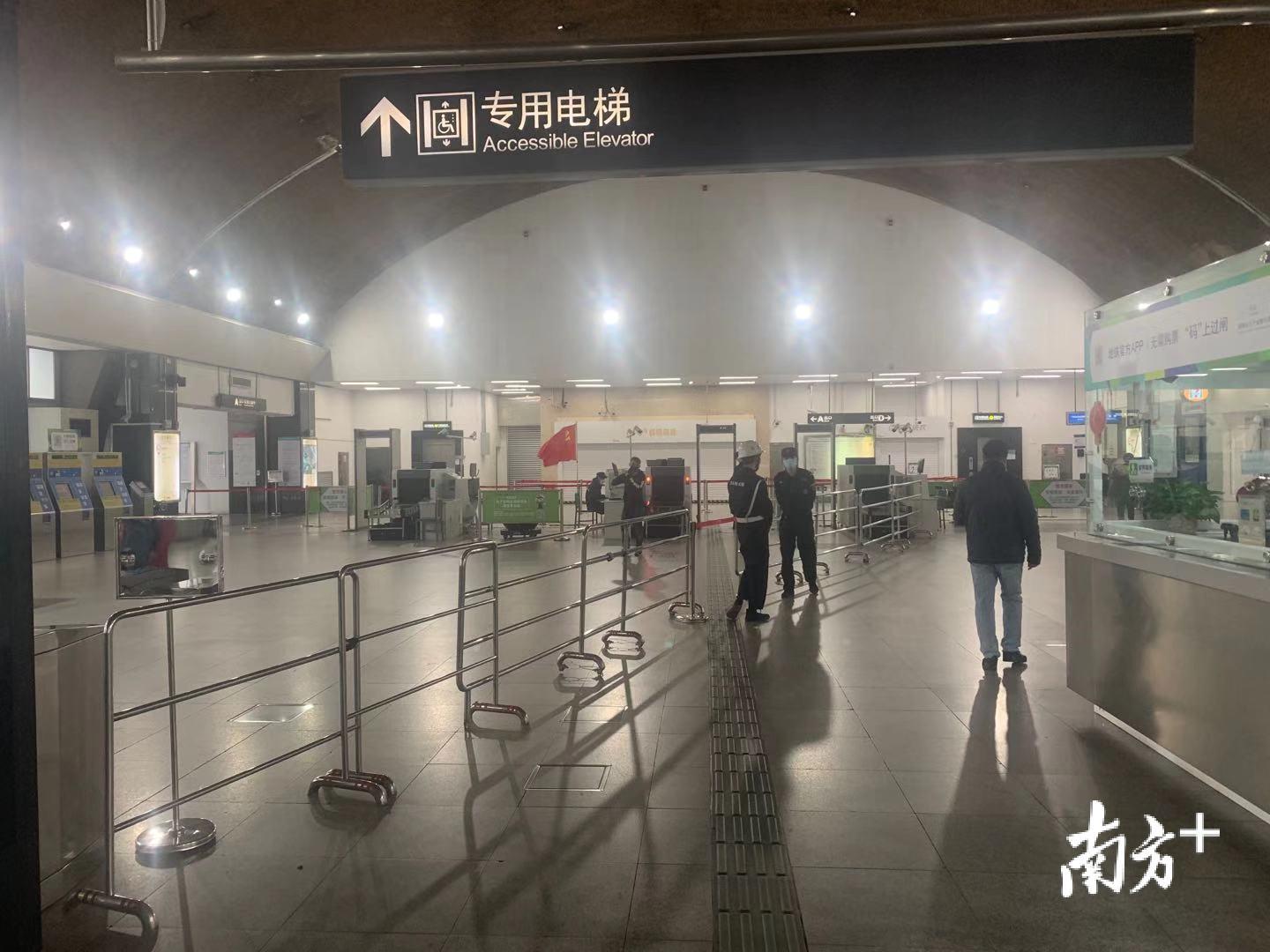
Bus and subway are the first choice for Guangzhou office workers to commute. February 3 is the first day after the Spring Festival holiday. In the past morning rush hour, Nanfang Daily and Nanfang+reporters visited the public transportation hub in the city and found that the platform was empty and the flow of people was still scarce. There is no sign of returning to work for the time being. According to statistics, in the past few days, the closer to the resumption of work day (February 3), the passenger flow of Guangzhou subway showed a step-by-step decline.

Entering the return peak, the subway passenger flow is gradually decreasing.

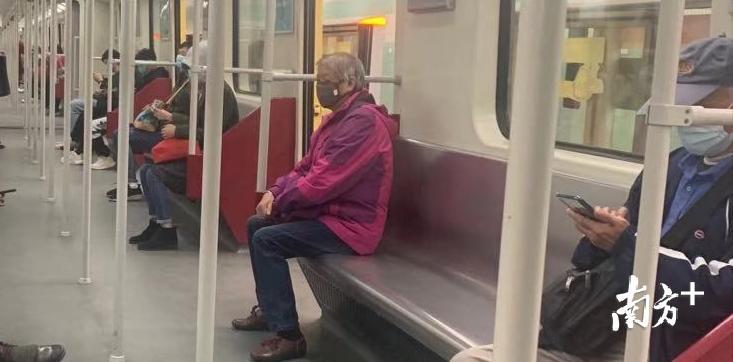
February 3rd is the return to work day of some units. The reporter found on the subway and bus that although it has entered the peak of return trip, there are not many people and cars on the road. At 9 o’clock in the morning, at the Kengkou Station of Metro Line 1, there were not many people taking the subway. Due to the epidemic situation, the waiting time was obviously longer than before, but there were not many people on the bus. Everyone basically had a seat and everyone wore a mask.

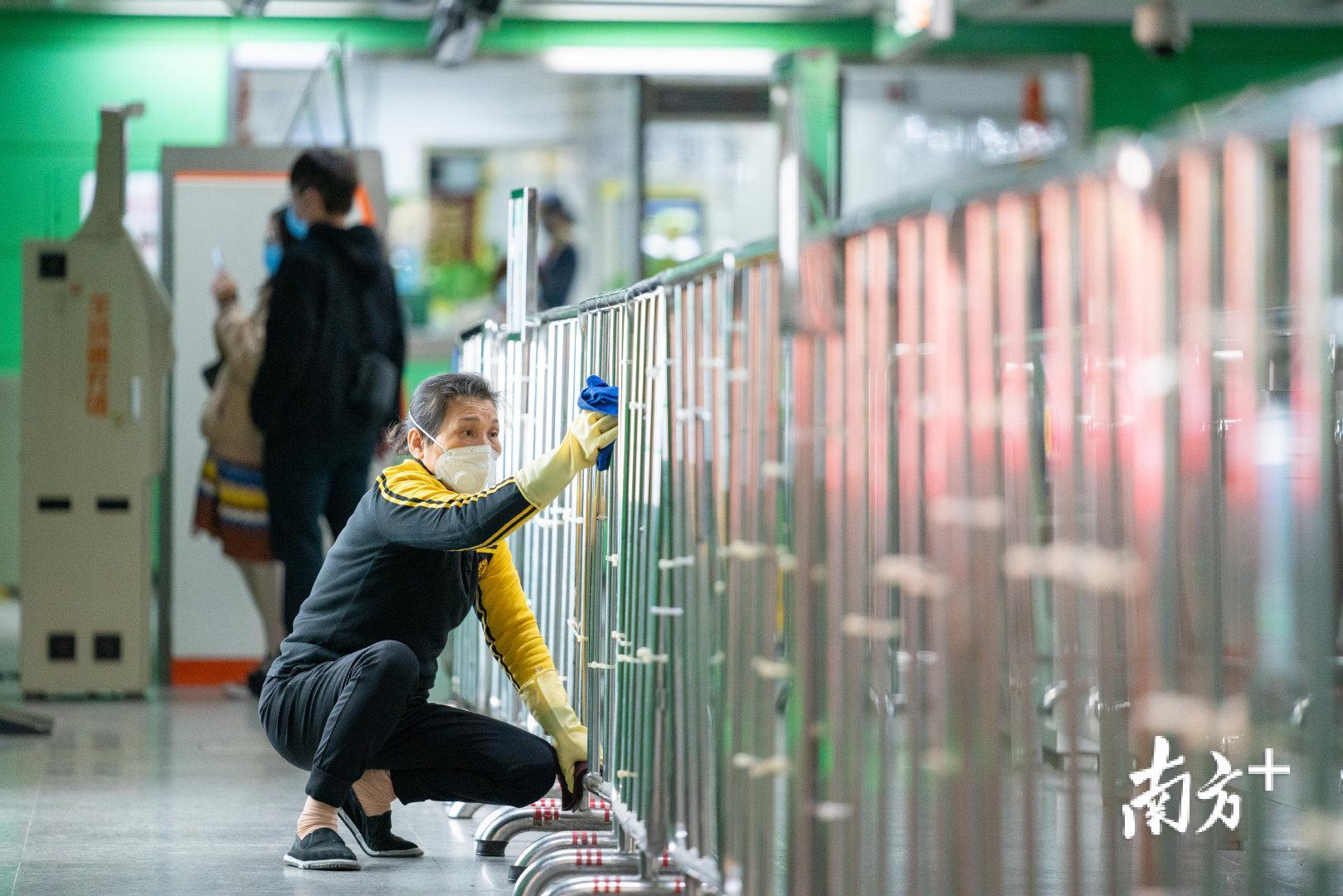
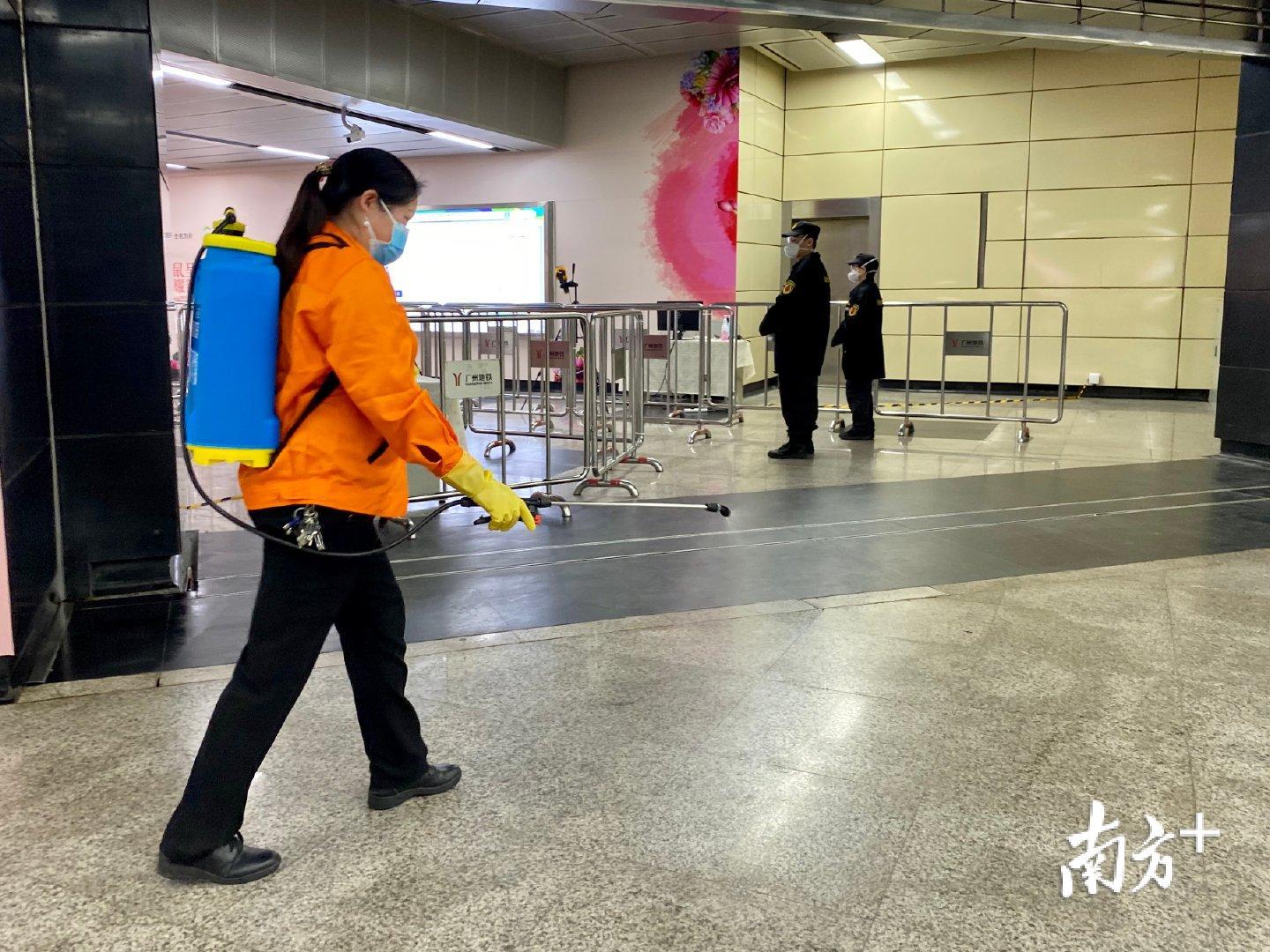
Line 5 passing through Zhujiang New Town and Railway Station used to be one of the most crowded lines in Guangzhou, especially in several transfer hubs. However, during the visit on February 3, the number of people on Line 5 was also small, which was generally more than that on Line 1 and Line 2. Although the seats were full, it was far from crowded and the space was relatively loose. "Some enterprises have not officially gone to work yet, and many employees are still returning home. The flow of people these days is not large, slightly more than before." The subway staff at Yangji Station told reporters. Although the station was deserted, the reporter still saw that some staff members disinfected the facilities in the subway from time to time and did not dare to relax.

In Binjiang East Plate, due to the lack of subway coverage, the Pearl River Swimming Pool Bus Terminal has become a large-scale bus hub on Binjiang East Road, where buses such as No.24, No.182, No.8, No.229 and No.266 originate. In the past, on the morning of every working day, office workers who took bus No.266 to work in Zhujiang New Town always queued up early, with a soybean milk bread in their hands, for fear that they would not get on the bus. However, at 8: 30 am on February 3, the reporter visited the bus terminal and found that the station was empty, and there were only two or three passengers on a bus at most. The driver told the reporter: "Today is a little better. In the past few days, there were often empty buses."

The passenger flow statistics of Guangzhou Metro further confirm the coldness of returning to work. On January 30 (the sixth day of the year), the total passenger traffic of the network was 948,000, on January 31 (the seventh day of the year) it was 899,000, on February 1 (the eighth day of the year) it was 833,000, and on February 2 (the ninth day of the year) it was 799,000. As the Spring Festival holiday ended, the passenger traffic became less and less. In sharp contrast, in the last few days of the Spring Festival holiday in 2019, the passenger flow showed an increasing trend every day.

On February 8 last year (the fourth day of the year), the total passenger traffic of Guangzhou subway network was 4.605 million passengers, 4.772 million passengers on the fifth day of the year and 5.312 million passengers on the sixth day of the year. February 11, 2019 (the seventh day of the year) is the first working day after the holiday, and the total passenger flow has risen to 6.497 million, and the passenger flow has been rising all the way.

Research report: As many as 41.7% of the employees in their companies plan to return to work on February 3rd.

According to the Notice of Guangdong Provincial People’s Government on the Time for Enterprises to Resume Work and School Opening, except for special industries, the time for enterprises to resume work in this administrative area shall not be earlier than 24: 00 on February 9. These special industries include those necessary for ensuring urban and rural operation (water supply, power supply, oil and gas, communication, public transportation, environmental protection, municipal sanitation and other industries), those necessary for epidemic prevention and control (industries such as production, transportation and sales of medical devices, medicines and protective articles), those necessary for people’s daily life (industries such as supermarkets, food production, logistics and distribution) and other related enterprises that are important to the national economy and people’s livelihood, supply Hong Kong and Macao, and urgently need to resume work under special circumstances.

In fact, there are not a few employees involved in these special industries. Since the rapid development of the epidemic, employees of enterprises that produce, sell and transport medical devices, medicines and protective articles have cancelled their vacations and fought in the front line of fighting the epidemic. On expressways, national highways and bus stops, countless volunteers and staff take the temperature of drivers and passengers day after day, "no one is missing, no car is missing".

So, how many people need to return to work on February 3 after the Spring Festival holiday? Zhaopin released the Investigation Report on Enterprises’ Resumption of Work in the Spring Festival of 2020 by investigating 1644 enterprises and 11412 people in the workplace. The results also show that among the interviewed enterprises, as many as 41.7% of the employees plan to return to work on February 3, and 18.9% will extend the return time to February 10.

In addition, 12.5% of the respondents’ companies will return to work as planned for various practical needs, that is, employees will be required to arrive at their posts on January 31. From the perspective of proportional distribution, these enterprises account for a relatively high proportion in private enterprises and government/institutions. In terms of postponing the resumption of work, most joint ventures and state-owned enterprises strictly abide by the State Council’s call and concentrate on returning to work on February 3rd.

Looking at the data of enterprises returning to work from the perspective of cities, the survey report compares the proportion of enterprises returning to work later than February 2 in each city, and it can be found that the south-central cities in the forefront are obviously more than the northern cities.

Elevator rooms in some office buildings have been equipped with "special paper for buttons"

Although the situation of returning to work in Guangzhou is still deserted, for many units, people are still entering the state of returning to work. At this time, the epidemic prevention work cannot be relaxed.

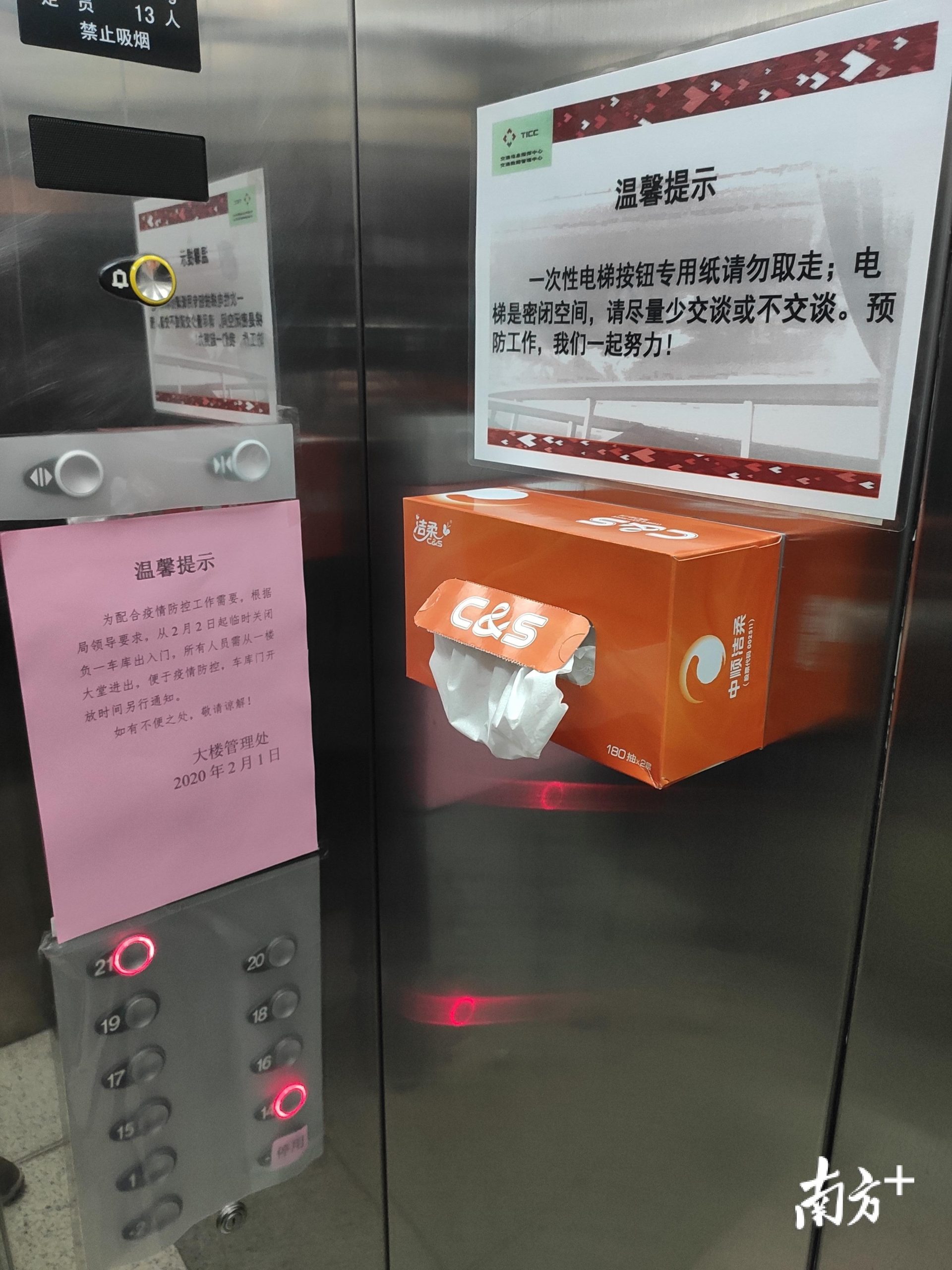
The reporter visited the elevator room of some office buildings and found that the property company has prepared for the protection of office workers. In an office building on Tianhe South Second Road, the security guard at the gate will take the temperature of every employee. A plastic film has been pasted on the button area of the elevator room, and a box of paper is installed next to it. The warm reminder reads, "Please don’t take away the disposable elevator button special paper; The elevator is a secret space, please talk as little as possible or not. " The disinfection record of every hour of rotation is also posted in the elevator room.

Earlier, Academician Zhong Nanshan said in an interview that the epidemic should reach its peak in a week or ten days. Therefore, if you must return to work during this period, these three details must be noted:

First of all, you must wear a mask in the high-risk area of the office. The most dangerous place is the elevator room, where the air is extremely stagnant and the flow of people is the largest, which needs great attention. It is recommended to wear a mask when taking the elevator; Do not touch the elevator button directly, it is recommended to use the paper towel to block the button; Conditional units must frequently disinfect the elevator room, especially the button area.

The second highest risk is the canteen/restaurant. At the time of meal, a large number of people crowded into the canteen, which is the area with the largest flow of people and the highest density. It is recommended to take off your mask at the last moment when you sit down to eat; Eat at the wrong peak, avoid face-to-face dining, and avoid eating and talking; Pack up and go back to the station to eat alone.

The third high risk is the office, where people come and go, which is basically the flow of fixed personnel. Although it is less dangerous, it still needs attention. It is recommended to wear a mask and keep a moderate distance from the conversation; Keep good ventilation in the office; Disinfect office supplies with alcohol.

[Nanfang Daily reporter] Tan Chao Zhu Weiliang

(Editor: Zhang Yang HN080)

Salt-tolerant crops are promising in the future.

  CCTV News:Experts said that in addition to rice, there are many salt-tolerant crops in China. At present, agricultural scientists are working hard to improve the salt and alkali tolerance of crops, and there is great potential for salt and alkali tolerance crops in the future.

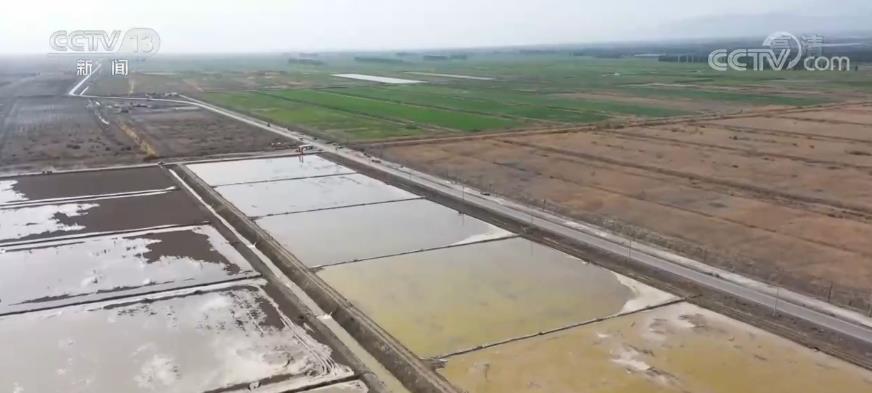
  At present, the types of saline-alkali land for sea rice cultivation in China are soda frozen soil saline-alkali land in northeast China, saline-alkali land around Bohai Sea, arid and semi-arid saline-alkali land in northwest China, saline-alkali land in coastal small watershed type, newly-born saline-alkali land in southeast China, and secondary saline-alkali land in degraded farmland in central China. Other salt-tolerant crops can also be planted in these places.

  Liu Chunming, Dean of Peking University Modern Agricultural College:Different crops have different levels of salt and alkali tolerance, such as some sorghum and cotton, which have strong salt and alkali tolerance, such as typical Salicornia angustifolia and Suaeda wetland, which can grow at a concentration (medium) close to seawater.

  Planting rice on saline-alkali land can improve saline-alkali land through long-term salt drainage, so that the goal of gradually turning saline-alkali land into fertile land can be realized.

  Liu Chunming, Dean of Peking University Modern Agricultural College:Corn, wheat, soybean and rice are all being studied (salt-tolerant planting). In the past few years, we have been digging up some important resources to transform the salt-tolerant ability of our crops.

Forcing merchants to stand in line to "choose one from the other"? Internet platforms can’t do this.

  Economic Daily News reporter She Ying reports: On November 6, the General Administration of Market Supervision, the Central Network Information Office and the State Administration of Taxation jointly held an administrative guidance meeting to regulate the online economic order, and representatives of 27 major Internet platform enterprises attended the meeting. Since the beginning of this year, the online economy has played an active role in responding to the epidemic and promoting economic and social development, but there are also problems that cannot be ignored. Especially during the promotion of "double 11", the problem of out-of-order competition is prominent.

  The meeting emphasized that Internet platform enterprises should face up to the existing problems, assume the main responsibility of ecological governance within the platform, adhere to legal compliance, and strengthen self-discipline and self-management. The meeting put forward clear requirements for Internet platform enterprises from nine aspects:

  No abuse of market dominance, monopoly agreements or illegal concentration of operators shall be implemented; Do not abuse the dominant position to force merchants to stand in line to "choose one from the other"; Do not use technical means to implement acts that hinder or undermine the normal operation of network products or services legally provided by other operators.

  Put an end to dishonesty and fraud such as swiping a bill, brushing comments and speculating letters, and do not publish grandiose live broadcast "battle reports" to inflate traffic, engage in illegal and illegal competitive behaviors such as defaming goodwill and kidnapping transactions, or rely on algorithm recommendations to conduct "invisible" unfair competition.

  Strictly implement the product quality responsibility, strictly control the publicity and sales circulation of counterfeit and shoddy goods, increase the protection of intellectual property rights, and actively assist law enforcement agencies to investigate and deal with infringement and counterfeiting violations.

  Perform the qualification examination and food safety management responsibilities of network operators, and ensure the authenticity of the registration and license certification documents of network operators.

  Strictly regulate advertising behavior, improve advertising taste, carry forward socialist core values, and put an end to false propaganda and vulgar content.

  Strengthen the prior review of the promotion plan, strengthen the control of false discounts, and do not charge unreasonable fees to the operators in the platform.

  Establish the concept of consumer first, and improve the efficient and convenient complaint handling and feedback mechanism. In accordance with the law, we will implement the seven-day unreasonable return of online shopping and the "three guarantees" of products.

  Attach great importance to the safety, use and protection of consumers’ personal information data, and strictly prevent personal information data from being leaked and abused.

  Abide by the tax collection and administration law and its implementation rules, the e-commerce law and other laws and regulations, fulfill tax obligations according to law, and enjoy tax concessions according to law.

Decision of State Taxation Administration of The People’s Republic of China on Amending the Detailed Rules for the Implementation of the Measures for the Administration of Invoices in People’s Republi

State Taxation Administration of The People’s Republic of China’s Decision on Amending the Detailed Rules for the Implementation of the Measures for the Administration of Invoices in People’s Republic of China (PRC) State Taxation Administration of The People’s Republic of China Order No.56, State Taxation Administration of The People’s Republic of China Order No.56, State Taxation Administration of The People’s Republic of China’s Decision on Amending the Detailed Rules for the Implementation of the Measures for the Administration of Invoices in People’s Republic of China (PRC), which was considered and adopted at the 3rd executive meeting in State Taxation Administration of The People’s Republic of China on December 29, 2023, is hereby promulgated and shall come into force as of March 1, 2024. Director State Taxation Administration of The People’s Republic of China: Hu Jinglin’s Decision on Amending the Detailed Rules for the Administration of Invoices in People’s Republic of China (PRC) on January 15th, 2024 In order to ensure the effective implementation of the Measures for the Administration of Invoices in People’s Republic of China (PRC) (hereinafter referred to as the Measures), State Taxation Administration of The People’s Republic of China decided to amend the Detailed Rules for the Administration of Invoices in People’s Republic of China (PRC) as follows: 1. As Article 3: "The electronic invoice mentioned in Article 3 of the Measures refers to the receipt and payment vouchers issued and collected in the form of data messages in the purchase and sale of goods, provision or acceptance of services and other business activities in accordance with the provisions of the tax authorities on invoice management. "Electronic invoices have the same legal effect as paper invoices, and no unit or individual may refuse them." Two, one article is added as Article 4: "The tax authorities shall build an electronic invoice service platform to provide digital electronic invoice issuance, delivery, inspection and other services for ticket users and individuals." One article is added as Article 5: "The tax authorities shall, in accordance with the provisions of laws and administrative regulations,Establish and improve the invoice data security management system to ensure the invoice data security. "Units and individuals shall carry out invoice data processing activities in accordance with the relevant provisions of State Taxation Administration of The People’s Republic of China, undertake the obligation of invoice data security protection according to law, and shall not store invoice data in excess of the specified amount, and shall not use, illegally sell or illegally provide invoice data to others in violation of regulations." 4. Article 4 is renumbered as Article 7, and the first paragraph is amended as: "The basic contents of an invoice include: invoice name, invoice code and number, serial number and purpose, customer name, bank and account number, commodity name or business item, unit of measurement, quantity, unit price, amount in words and figures, tax rate (collection rate), tax amount, drawer, billing date and name of billing unit (individual). 5. Article 5 is renumbered as Article 8 and amended as: "An invoice-receiving entity may request the tax authorities in writing to use the invoice with its name printed on it, and the tax authorities shall confirm the type and quantity of the invoice with its name printed on it according to Article 15 of the Measures." 6. Article 6 is renumbered as Article 9 and amended as: "The tax authorities shall supervise and manage the enterprises that print invoices according to the requirements of government procurement contracts and the management of anti-counterfeiting products for invoices." 7. Article 10 is renumbered as Article 13, and the first paragraph is amended as: "The tax authorities that supervise the production of invoices shall issue a notice of invoice printing as required, and the printing enterprises must print as required." Eight, thirteenth to sixteenth, the first paragraph is amended as:"The special seal for invoices mentioned in Article 15 of the Measures refers to the seal with the words of its name, unified social credit code or taxpayer identification number and special seal for invoices stamped by the units and individuals receiving invoices when they issue paper invoices." 9. Article 15 is renumbered as Article 18 and amended as: "The methods of collection mentioned in Article 15 of the Measures refer to the methods of batch supply, exchange of the old and bring in the new, inspection of the old and bring in the new, and determination of the quota. "The tax authorities determine or adjust the type, quantity, amount and method of collecting invoices according to the tax risk degree, tax credit level and actual business situation of units and individuals." Ten, delete sixteenth, eighteenth, twenty-first, twenty-second, twenty-third, thirty-seventh. XI. One article is added as Article 25: "The amount stipulated in Article 19 of the Measures shall not be changed, including the unit price and quantity involved in the calculation of the amount." 12. Article 27 is renumbered as Article 26 and amended as: "After the paper invoice is issued, if it is necessary to void the invoice, such as sales return, wrong invoicing, suspension of taxable services, etc., the original invoice shall be recovered and marked with the word’ void’, and then the invoice shall be void. "After issuing a paper invoice, if it is necessary to issue a red-ink invoice in case of sales return, wrong invoicing, suspension of taxable services, sales discount, etc., it shall recover all the original invoices and indicate the words’ red-ink’ before issuing a red-ink invoice. If it is impossible to recover all the original invoices, it shall issue a red-ink invoice after obtaining the valid certificate of the other party. " XIII. One article is added,As Article 27: "After issuing an electronic invoice, in case of sales return, billing error, suspension of taxable services, sales discount, etc., a red-ink invoice shall be issued in accordance with the regulations." Article 28 is amended as: "When issuing invoices, units and individuals shall fill in complete items and true contents. "Paper invoices should be filled out in the order of invoice numbers, with clear handwriting, all printed at one time, and the contents are exactly the same, and the invoice joint and deduction joint should be stamped with the special invoice seal." 15. One article is added as Article 29: "Inconsistency with the actual business situation mentioned in Article 21 of the Measures refers to one of the following acts:" (1) Issuing or obtaining invoices without buying or selling commodities, providing or receiving services or engaging in other business activities; "(2) buying or selling commodities, providing or accepting services, or engaging in other business activities, but the buyer, seller, commodity name, business items, amount, etc. specified in the invoices issued or obtained are not in conformity with the actual situation." 16. One article is added as Article 31: "Units and individuals providing services such as collecting and issuing invoices to clients shall be subject to the supervision of the tax authorities, and the maximum amount of invoice data stored shall comply with the provisions of the tax authorities." 17. One article is added as Article 32: "Where an electronic invoice information system is developed to provide tax-related services such as inquiry, download, storage and use of invoice data for others, it shall comply with the data standards and management regulations of the tax authorities and sign an agreement with the client.Do not use invoice data beyond the scope of authorization. 18. One article is added as Article 34: "Identity verification mentioned in Article 26 of the Measures means that when units and individuals collect, issue and issue invoices on their behalf, their handlers should pay taxes in their real names." 19. One article is added as Article 36: "The tax authorities may extract, transfer, consult and copy invoice data during invoice inspection." Twenty, Article 34 is changed to Article 39, which is amended as: "If the tax authorities punish acts that violate the laws and regulations on invoice management according to law, the tax authorities at or above the county level shall decide; If the fine is less than 2,000 yuan, it may be decided by the tax office. " 21. One article is added as Article 40: "Where other vouchers are used instead of invoices as stipulated in Item 6 of Article 33 of the Measures, it includes:" (1) invoices should be issued but invoices are not issued, and other vouchers are used instead of invoices; "(2) invoices should be obtained but not obtained, and other vouchers other than invoices or self-made vouchers should be used for tax deduction, export tax rebate, pre-tax deduction and financial reimbursement; "(three) to obtain invoices that do not meet the requirements for tax deduction, export tax rebate, pre-tax deduction and financial reimbursement. "If it constitutes evasion of tax payment, fraudulent export tax refund or false invoicing, it shall be implemented in accordance with the relevant provisions of the People’s Republic of China (PRC) Tax Collection and Management Law and the Measures." Twenty-two, Article 35 is changed to Article 41 and amended as: "The announcement mentioned in Article 38 of the Measures refers to,The tax authorities shall announce the illegality of taxpayers’ invoices in tax places or news media such as radio, television, newspapers, periodicals and the Internet. The contents of the announcement include: the name of the taxpayer, the unified social credit code or the taxpayer identification number, the place of business, and the specific circumstances of violating the invoice management regulations. 23. One article is added as Article 43: "The tax bureaus of cities under separate state planning shall do a good job in invoice management with reference to the responsibilities of the tax bureaus of provinces, autonomous regions and municipalities directly under the Central Government in the Measures." Twenty-four, third, seventh, fourteenth and thirty-first in the "invoice" is amended as "paper invoice". Twenty-five, the name of the third chapter and fourteenth in the "purchase" is amended as "receiving". In addition, the order of articles and individual words are adjusted and modified accordingly. This decision shall come into force as of March 1, 2024. The Detailed Rules for the Implementation of the Measures for the Administration of Invoices in People’s Republic of China (PRC) shall be revised accordingly and re-promulgated. Detailed rules for the implementation of the measures for the administration of invoices in People’s Republic of China (PRC)(Promulgated by Order No.25 of State Taxation Administration of The People’s Republic of China on February 14, 2011, the first amendment was made according to the Decision of State Taxation Administration of The People’s Republic of China on Amending the Detailed Rules for the Implementation of the Measures for the Administration of Invoices in People’s Republic of China (PRC) on December 27, 2014, and the second amendment was made according to the Decision of State Taxation Administration of The People’s Republic of China on Amending the Rules of Some Tax Departments on June 15, 2018, and the State Taxation Administration of The People’s Republic of China on July 24, 2019 announced the cancellation of a batch of taxes. The Third Amendment of Certification Matters and Decision on Abolishing and Amending Some Rules and Normative Documents Chapter I General Provisions Article 1 These Rules are formulated in accordance with the provisions of the Measures for the Administration of Invoices in People’s Republic of China (PRC) (hereinafter referred to as the Measures). Article 2 Invoices with uniform patterns throughout the country shall be determined by State Taxation Administration of The People’s Republic of China. Invoices with uniform patterns within provinces, autonomous regions and municipalities directly under the Central Government shall be determined by the tax bureaus of provinces, autonomous regions and municipalities directly under the Central Government (hereinafter referred to as provincial tax bureaus). Article 3 The electronic invoice mentioned in Article 3 of the Measures refers to the receipt and payment vouchers issued and collected in the form of data messages in accordance with the provisions of the tax authorities on invoice management in the purchase and sale of commodities, provision or acceptance of services and other business activities. Electronic invoices and paper invoices have the same legal effect, and no unit or individual may refuse them. Article 4 The tax authorities shall build an electronic invoice service platform,Provide digital and other forms of electronic invoice issuance, delivery, inspection and other services for ticket users and individuals. Article 5 The tax authorities shall, in accordance with the provisions of laws and administrative regulations, establish and improve the invoice data security management system to ensure the invoice data security. Units and individuals shall carry out invoice data processing activities in accordance with the relevant provisions of State Taxation Administration of The People’s Republic of China, undertake the obligation of invoice data security protection according to law, and shall not store invoice data in excess of the specified amount, and shall not use, illegally sell or illegally provide invoice data to others in violation of regulations. Article 6 The basic forms of paper invoices include stub forms, invoice forms and bookkeeping forms. The stub shall be kept by the payee or the drawer for future reference; The invoice is combined by the payer or the drawee as the original payment voucher; Bookkeeping is made by the payee or the drawer as the original voucher for bookkeeping. The tax authorities at or above the provincial level may, according to the management of paper invoices and the needs of taxpayers’ business operations, increase or decrease other invoices, and determine their uses. Article 7 The basic contents of an invoice include: invoice name, invoice code and number, serial number and purpose, customer name, bank and account number, commodity name or business item, unit of measurement, quantity, unit price, amount in words and figures, tax rate (collection rate), tax amount, drawer, date of invoicing, name (seal) of billing unit (individual), etc. The tax authorities at or above the provincial level may determine the specific contents of invoices according to the needs of economic activities and invoice management. Article 8 An invoice-receiving unit may request the tax authorities in writing to use the invoice with its name printed on it.The tax authorities shall, in accordance with the provisions of Article 15 of the Measures, confirm the types and quantities of invoices bearing the name of the entity. Chapter II Printing of Invoices Article 9 The tax authorities shall supervise and manage enterprises that print invoices according to the requirements of government procurement contracts and the management of anti-counterfeiting products for invoices. Article 10 The national unified anti-counterfeiting measures for paper invoices shall be determined by State Taxation Administration of The People’s Republic of China, and the provincial tax bureau may add anti-counterfeiting measures for paper invoices in the local area according to needs, and file them with State Taxation Administration of The People’s Republic of China. Special anti-counterfeiting products for paper invoices shall be kept in special warehouses according to regulations and shall not be lost. Defective products and waste products shall be destroyed centrally under the supervision of tax authorities. Article 11 The unified national invoice producer seal is the legal symbol for tax authorities to manage invoices, and its shape, specifications, content and printing color shall be stipulated by State Taxation Administration of The People’s Republic of China. Twelfth nationwide invoice replacement is determined by State Taxation Administration of The People’s Republic of China; The replacement of invoices within provinces, autonomous regions and municipalities directly under the Central Government shall be determined by the Provincial Taxation Bureau. When the invoice is changed, it shall be announced. Article 13 The tax authorities that supervise the production of invoices shall, as required, issue a notice of printing invoices, and the printing enterprises must print them as required. The invoice printing notice shall specify the name of the enterprise that printed the invoice, the name of the unit that used the invoice, the name of the invoice, the invoice code, the type, the serial number, the specification, the printing color, the printing quantity, the starting and ending numbers, the delivery time and place, etc. Article 14 The finished products printed by an invoice printing enterprise shall be kept in a special warehouse after acceptance according to regulations, and shall not be lost. Waste products should be destroyed in time.Chapter III Collection of Invoices Article 15 The identity certificate of the agent mentioned in Article 15 of the Measures refers to the resident identity card, passport or other documents that can prove the identity of the agent. Article 16 The special seal for invoices mentioned in Article 15 of the Measures refers to the seal stamped by the units and individuals who receive invoices when they issue paper invoices with the words of their name, unified social credit code or taxpayer identification number and special seal for invoices. The style of special invoice seal is determined by State Taxation Administration of The People’s Republic of China. Article 17 The tax authorities shall keep the impression of the special seal for invoices provided by units and individuals who receive paper invoices for future reference. Article 18 The methods of requisition mentioned in Article 15 of the Measures refer to the methods of batch supply, exchange of the old and bring in the new, inspection of the old and bring in the new, and determination of the quota. The tax authorities determine or adjust the type, quantity, amount and method of receiving invoices according to the tax risk degree, tax credit level and actual business situation of units and individuals. Article 19 The use of invoices mentioned in Article 15 of the Measures refers to the receipt and storage of invoices and related invoicing data. Twentieth "written proof" as mentioned in Article 16 of the Measures refers to the relevant business contracts, agreements or other materials approved by the tax authorities. Article 21 The tax authorities shall sign an agreement with the units entrusted to issue invoices on their behalf, specifying the types, objects, contents and related responsibilities of issuing invoices on their behalf. Chapter iv issuance and storage of invoices article 22 under the special circumstances mentioned in article 18 of the measures, the payer shall issue invoices to the payee,Refers to the following situations: (1) when the acquisition unit and withholding agent pay personal money; (2) State Taxation Administration of The People’s Republic of China believes that other invoices need to be issued by the payer to the payee. Twenty-third retail small commodities to consumers or provide sporadic services, whether it can be exempted from issuing invoices one by one, is determined by the provincial tax bureau. Twenty-fourth units and individuals who fill out invoices must issue invoices when business operations are confirmed. No invoices are allowed without business. Article 25 The amount stipulated in Article 19 of the Measures shall not be changed, including the unit price and quantity involved in the calculation of the amount. Article 26 After the paper invoice is issued, in case of sales return, wrong invoicing, suspension of taxable services, etc., if it is necessary to void the invoice, the original invoice shall be recovered and marked with the word "void" to void the invoice. If it is necessary to issue a red-ink invoice after issuing a paper invoice, such as sales return, wrong invoicing, suspension of taxable services, sales discount, etc., it shall withdraw all the original invoices and indicate the word "red-ink" before issuing a red-ink invoice. If all copies of the original invoice cannot be recovered, a red-ink invoice shall be issued after obtaining the valid certificate of the other party. Twenty-seventh after the issuance of electronic invoices, if sales are returned, invoicing is wrong, taxable services are suspended, sales are discounted, etc., red-ink invoices shall be issued in accordance with regulations. Article 28 When issuing invoices, units and individuals shall fill in complete items and true contents.Paper invoices shall be filled out in the order of invoice numbers, with clear handwriting, all printed in one copy, and the contents are completely consistent, and the invoice and deduction copies shall be stamped with the special invoice seal. Article 29 The term "inconsistent with the actual business situation" as mentioned in Article 21 of the Measures refers to one of the following acts: (1) Issuing or obtaining invoices without buying or selling goods, providing or receiving services or engaging in other business activities; (2) buying and selling commodities, providing or accepting services, and engaging in other business activities, but the buyer, seller, commodity name, business items, and amount specified in the invoices issued or obtained are inconsistent with the actual situation. Article 30 Invoices shall be issued in Chinese. National autonomous areas can use a national language commonly used in the local area at the same time. Article 31 Units and individuals providing services such as collecting and issuing invoices to clients shall be subject to the supervision of the tax authorities, and the maximum amount of invoice data stored shall comply with the provisions of the tax authorities. Article 32 Where an electronic invoice information system is developed to provide tax-related services such as query, download, storage and use of invoice data for others, it shall comply with the data standards and management regulations of the tax authorities, and sign an agreement with the client, and shall not use invoice data beyond the authorized scope. Thirty-third "measures" mentioned in article twenty-fifth of the provisions of the use of the region refers to the State Taxation Administration of The People’s Republic of China and the provincial tax bureau of the region. Article 34 The term "identity verification" as mentioned in Article 26 of the Measures refers to that when units and individuals collect, issue and issue invoices on their behalf,The agent shall pay taxes in real name. Thirty-fifth units and individuals that use paper invoices shall properly keep the invoices. When the invoice is lost, it shall be reported to the tax authorities in writing on the day when the loss is found. Chapter V Inspection of Invoices Article 36 During the inspection of invoices, the tax authorities may extract, transfer, consult and copy the invoice data. Thirty-seventh "measures" mentioned in Article 31 of the invoice for the ticket is limited to use in the county (city). When it is necessary to transfer invoices from other counties (cities) for inspection, it shall be submitted to the tax authorities of the county (city) for receipt of invoices. Thirty-eighth units and individuals who use tickets have the right to apply to the tax authorities to identify the authenticity of invoices. The tax authorities that receive the application shall accept and be responsible for identifying the authenticity of the invoice; If it is difficult to identify, it may be submitted to the tax authorities under invoice supervision for assistance in identification. Invoices seized at the scene of forgery or alteration, as well as at the place of sale and storage, shall be identified by the local tax authorities. Chapter VI Penalties Article 39 If the tax authorities punish acts that violate the laws and regulations on invoice management according to law, it shall be decided by the tax authorities at or above the county level; A fine of less than 2000 yuan may be decided by the tax office. Article 40 The use of other vouchers instead of invoices as stipulated in Item 6 of Article 33 of the Measures includes: (1) invoices should be issued but invoices are not issued, and other vouchers are used instead of invoices; (2) The invoices should be obtained but not obtained, and other vouchers other than invoices or self-made vouchers are used for tax deduction, export tax rebate, pre-tax deduction and financial reimbursement;(three) to obtain invoices that do not meet the requirements for tax deduction, export tax rebate, pre-tax deduction and financial reimbursement. Those who evade paying taxes, defraud export tax rebates or falsely issue invoices shall be implemented in accordance with the relevant provisions of the People’s Republic of China (PRC) Tax Collection and Management Law and the Measures. Article 41 The term "announcement" as mentioned in Article 38 of the Measures means that the tax authorities shall announce the taxpayer’s illegal invoices in tax places or news media such as radio, television, newspapers, periodicals and the Internet. The contents of the announcement include: the name of the taxpayer, the unified social credit code or the taxpayer identification number, the place of business, and the specific circumstances of violating the invoice management regulations. Article 42 If a violation of the invoice management regulations is serious enough to constitute a crime, the tax authorities shall transfer it to judicial organs for handling according to law. Chapter VII Supplementary Provisions Article 43 The tax bureaus of cities under separate state planning shall do a good job in invoice management with reference to the responsibilities of the tax bureaus of provinces, autonomous regions and municipalities directly under the Central Government in the Measures.
Tencent Car Alliance’s "Eco-car Networking" upgrade solves three major problems in the industry.

On May 22nd, "Smart Travel Sub-forum of Tencent Global Digital Ecology Conference" was held in Kunming. Tencent Chelian put forward the industry value proposition of evolution to the people-centered "eco-car networking", and released the "eco-car networking" solution, which organically connected Tencent’s and third-party content services to the car, and through super ID+ online payment, opened up the seamless experience in front of the car, in the car and behind the car. Based on the AI scene engine, the intelligent scene-driven "thousands of people+services to find people" is realized. At the same time, Tencent Chelian integrated the on-board WeChat service in the "Eco-car Networking" solution to provide users with more humanized on-board services.

"Tencent Chelian hopes to connect car companies, developers and users to build a people-centered eco-car network." Zhong Xuedan, vice president of Tencent Chelian, said that on the one hand, Tencent Chelian provides developers with a brand-new in-vehicle application framework, inherits the existing developer resources of the mobile Internet, and encourages developers to carry out application innovation and promote application ecological prosperity. On the other hand, we will work with partners in the automotive industry to create a service and application ecosystem suitable for automotive scenes, so that more digital and humanized services can be injected into automobiles, creating and enhancing user value.

Tan Benhong, Executive Vice President of Changan Automobile, Wang Qiujing, member of the Executive Committee of Guangzhou Automobile Group and President of Guangzhou Automobile Research Institute, Zhong Xiangping, Vice President of Tencent, and Zhong Xuedan, Vice President of Tencent Car Federation, witnessed the official release of the "Eco-car Networking" solution.

Four concepts to solve three major problems in the industry and promote the evolution of "eco-car networking"

Zhong Xuedan believes that the car networking industry is still in an early stage, and the evolution of the industry faces three core problems: First, compared with the mobile Internet, the content and services in the car are still lacking, and a large number of demand scenarios need to be developed urgently; Second, the Internet of Vehicles ecology is not the same as simply "putting the Internet ecology on the car", and the application of mobile Internet rarely meets the needs of car scenes. Third, the current car networking application scenario is fragmented, and it is impossible to get a consistent and coherent experience on and off the car.

In order to solve the three major problems when getting off the bus, Tencent Car Federation proposed to evolve to "eco-car networking". Zhong Xuedan introduced that "eco-car networking" has four core evolutionary directions: first, people-centered. Tencent hopes to combine the deep perception of the trinity of people, cars and roads, actively discover user needs and push corresponding services, and realize the evolution from "one thousand people" to "thousands of people" and from "people looking for services" to "services looking for people". Second, full-time online. Through super ID and WeChat payment, we can realize full-time interconnection across scenes and terminals, and open up a seamless digital experience before/during/after the car. Third, work with partners in the automotive industry to make the rich content service ecology fully adapt and organically combine with the car scene. Fourth, innovate together with developers, provide an in-vehicle application framework that is convenient to develop, and promote the ecological prosperity of applications.

As the most important eco-partners of Tencent Car Federation, Changan and GAC expressed their expectation for the development of "eco-car networking". Tan Benhong, executive vice president of Changan Automobile, said: "Changan Automobile highly recognizes Tencent’s smart travel strategic layout, and I think this layout must be a great layout that focuses on culture and plans the overall situation. I just listened to the people-centered eco-car networking. This must be the eco-car networking in the new era, and the future deserves our common expectation. "

Wang Qiujing, member of the Executive Committee of Guangzhou Automobile Group and president of Guangzhou Automobile Research Institute, said: "In recent years, Guangzhou Automobile has been carrying out extensive and in-depth cooperation with Tencent in cloud technology, AI artificial intelligence technology, car networking, content services, travel services, etc. Some products have been launched. After the release today, we also expect that our cooperation with Tencent will further develop into the eco-car network and develop more efficiently to travel services, hoping to export greater value to users and the automobile industry. "

Launched the "Eco-car Networking Solution", and the intelligent scene drove "service to find people"

Based on the above four evolution directions, Tencent Auto Intelligence has been upgraded, and an "eco-car networking solution" has been launched to help partners build an "eco-car networking" by providing a lightweight, ecological, cross-platform and cross-terminal tool chain.

First of all, Tencent Chelian launched a scene engine. Zhong Xuedan believes that the understanding of users, in-depth mining of vehicle behavior and scene data, rich ecological resources and unified account system are four important prerequisites for personalized intelligent recommendation. Based on super ID, AI, big data and LBS capabilities, the scene engine realizes intelligent matching of user interests, car-side scenes and service applications, and actively pushes personalized services through scene awareness.

For example, in the parking scene, the early warning function of illegal parking was introduced. When the vehicle senses that the owner is about to stop, it can combine LBS, traffic data and parking service data to give the user a warning of parking sticker risk and guide the owner to a safe parking place. In the car entertainment scene, a scene song list recommendation is introduced, which can be combined with users’ hobbies, weather, traffic conditions, local characteristics, etc., and push to users the music that will hit their hearts and respond to the situation. In the scene of go on road trip, the intelligent travel road book recommendation service is launched, which combines the scene perception and rich dynamic travel data to recommend interesting games along the way for users, such as reminding users of "the best sunset viewing point and time today", so as not to miss the good scenery on the way. When the vehicle breaks down, it can carry out automatic fault diagnosis, guide the user to the nearest maintenance point by himself, or call the nearby 4S shop by intelligent assisted rescue with one-click voice.

Secondly, Tencent Chelian provides super ID and WeChat payment capabilities to help car companies access rich mobile Internet services and open up multiple terminals such as mobile phones, cars and smart devices to realize "full-time online" services. For example, the collection of songs on mobile phones and cars can be synchronized, and users can continue to listen to radio programs they listen to at home in the morning. Order a cup of coffee with the car voice assistant in the car, get off the bus and arrive at the office synchronously with the coffee.

At the same time, in the "Eco-car Networking Solution", Tencent Car Alliance launched a set of developers’ application framework that is cross-OS and lightweight in the cloud-Tencent Small Scene. Tencent’s small scene does not need to be downloaded and installed, and can be updated online in the cloud to realize "active wake-up" based on voice and scene. According to reports, the mini-scenario is a set of in-vehicle application framework open to developers. As long as developers have a small program foundation, they can publish it as a Tencent mini-scenario with simple transformation, and at the same time support Tencent to enrich the access to internal and external ecological resources.

The car WeChat service expected by the industry is also integrated into the "Eco-car Networking Solution". In-vehicle WeChat is tailor-made for driving scenes, and provides WeChat messaging and voice calling functions based on full voice interaction. Users can send and receive messages only by moving their mouths without hands. Combined with the on-board hardware, you can give instructions with one button through the steering wheel button to arouse WeChat. And the on-board WeChat service can sense with the mobile phone Bluetooth, automatically log in when getting on the bus, and automatically disconnect when getting off the bus. At the same time, it supports receiving location on WeChat and launching navigation quickly. Zhong Xuedan revealed that it is expected that in 2019, there will be an "eco-car networking" model equipped with car WeChat.

Open Co-construction, Helping the digitalization of the whole cycle of "manufacturing-sales-travel-after-sales" in the automobile industry.

At present, Tencent Chelian has reached a partnership with 19 car companies, and 45 models have been or will soon land, and more than 300 head eco-partners have been joined to provide services for car owners.

On the basis of the "Eco-car networking solution", the cooperation mode between Tencent and car enterprise partners is also constantly expanding and deepening, and cooperation has been started in the aspects of car cloud, travel service and smart 4S shop, which provides coverage for the transformation of the automobile industry. "Manufacturing-sales-travel-after-sales" full life cycle assistance.

According to Li Bo, general manager of Tencent’s car-connected cloud and travel business, Tencent launched the "car brain" solution for car cloud, which not only provided traditional IAAS and PAAS services to car companies, but also joined many partners to provide a series of SAAS cloud solutions. At present, more than 18 mainstream car manufacturers have used the services of Tencent Auto Cloud, and the intelligent networked cloud platform has also landed in many car companies.

In the field of travel service, Tencent moped enterprises started to build a travel service platform from 0 and transformed into a mobile travel service provider. According to Li Bo, Tencent’s travel service solution provides one-stop cloud service capabilities, helps build a leading travel system, and provides a full-stage refined operation plan. At present, Tencent has provided travel service solutions and cloud services for five travel service companies, including GAC Travel, T3 Travel and Didi.

Tencent’s smart 4S distribution solution helps car companies to get through the "people-car-store" closed loop, and get through the links of pre-sales communication, vehicle test drive, sales and after-sales maintenance, so as to provide stores with a smarter customer management system, improve the efficiency and service of 4S stores themselves, and at the same time, the data of users’ maintenance during the service process will be synchronized to car companies, providing a reference for car companies’ manufacturing optimization. At present, Tencent has cooperated with major listed distribution groups and landed more than 100 4S stores.

Fully escort "the biggest challenge" Spring Festival travel rush warmly guards "flowing China"

  On January 7, 2023, Spring Festival travel rush officially kicked off, which indicates that people are getting closer and closer to returning home and traveling. Many people are looking forward to embarking on a long journey, or going back to their hometown for a reunion year, or taking a trip.

  According to preliminary analysis and judgment, the total number of national passenger flows in Spring Festival travel rush this year will exceed 2 billion, an increase of 99.5% over the same period of last year, and return to 70% of the same period in 2019 (2.98 billion). Such a passenger flow scale directly reflects the mobility enthusiasm of the whole society, and also makes people feel a hot "flowing China" again.

  However, compared with previous years, this year’s peak of people flow and epidemic situation in Spring Festival travel rush is the most uncertain, complicated and challenging Spring Festival travel rush in recent years. According to the Ministry of Transport, this year, Spring Festival travel rush has shown the characteristics of a substantial increase in passenger flow, a substantial increase in freight demand, a greater risk of infection among front-line personnel, and an increase in hidden dangers in production safety.

  This means that to ensure the smooth and orderly progress of Spring Festival travel rush this year, relevant departments, transportation enterprises and travelers need to make full response together. Passengers should take the initiative to do personal health protection. Relevant departments and transportation enterprises should not only implement detailed epidemic prevention and control measures, but also have perfect emergency plans for various uncertainties including traffic safety risks and natural disaster risks. Especially after the transportation system has experienced a period of low-load operation, Spring Festival travel rush still has some risk challenges to deal with in the face of a substantial increase in passenger flow this year. The responsible subjects in all links must keep up their spirits, attach great importance to it, think more about precautions and "safety redundancy", think more fully about difficulties and problems, and weave the "fence" of security measures and risk prevention more firmly and densely.

  Spring Festival travel rush is connected with the dream of family reunion. This year, Spring Festival travel rush, which is the most complicated and challenging in recent years, is an exam with all-round increase in difficulty. All responsible subjects should fully respond with the ultimate sense of responsibility and concentration, so as to ensure everyone’s road to Spring Festival travel rush is safe and smooth, protect the dream of family reunion, and explore experience and gather confidence to promote the comprehensive recovery of social mobility. (Zhu Changjun, special commentator of Yang Guangwang)

Sharp L image has strong function, which improves the experience of cart driving and family travel.

540The function of image is really convenient to use, sharp edge.LWhen parking and reversing, you don’t have to look around, and the image is clear at a glance, especially in narrow parking spaces, and you feel a lot more at ease. I didn’t see this configuration before, and I feel that this timeLIt really adds a lot of points, the price is lower than that of Touran, and the configuration is still real. entire carOTAThere are also updates, so you don’t have to run at ordinary times.4SThe shop is tossing.

Russia’s GDP in June fell by 4.9% year-on-year, and experts say it will continue to decline.

  China news agency, Moscow, July 28 (Tian Bing, Liu Jingyao) According to data released by the Russian Ministry of Economic Development on the 27th, Russia’s gross domestic product (GDP) dropped by 4.0% in the second quarter of this year and by 0.5% in the first half of this year, much better than previously expected. After a year-on-year decline of 4.3% in May, GDP in June decreased by 4.9% year-on-year. A number of Russian experts said on the 28th that the Russian economy will continue to decline in the short term due to Western sanctions.

  Western sanctions against Russia have increased Russia’s dependence on the primary industry. According to the Ministry’s data, among all industries, traditional export-oriented industries such as oil production and refining increased slightly year-on-year, restoring production to the level of January. In agriculture, output continued to increase in June. The pharmaceutical and construction sectors performed well, with year-on-year growth of 16.5% and 2.3% respectively, while export-oriented industries and industries with a large proportion, including chemical industry, metallurgy, automobile, light industry and furniture production, still declined seriously.

  The Russian Ministry of Economic Development predicts that Russia’s GDP will drop by 7.8% and the inflation rate will be 17.5% in 2022. In a report released by the International Monetary Fund on the 26th, the decline rate of Russia’s GDP forecast in 2022 was adjusted to 6% and 3.5% in 2023. Compared with the forecast data in April, the organization raised Russia’s GDP forecast data by 2.5 percentage points this year and lowered its GDP forecast data by 1.2 percentage points next year.

  Mikhail, president of the Russian State-owned Development Bank, said on the 28th that according to data analysis, it is estimated that by the end of 2022, Russia’s GDP will drop by 5%, the inflation rate will reach 13%, and the annual benchmark interest rate of the Russian central bank will drop to 7%. The exchange rate of the ruble against the US dollar will reach 69 -70 rubles at the end of the year, and the price of oil will drop to 70 US dollars per barrel. "The decline of the Russian economy is not limited to 2022, but will continue to decline in 2023. This is a major crisis we are currently facing."

  Melnikov, head of the Russian Energy Development Center, said that the current domestic economic situation is "understandable". Under western sanctions, the export-oriented industries that are least affected will take the lead in recovery, while the automobile industry and metallurgical industry cannot return to their previous levels. In the medium term, due to the need to replace foreign products that cannot be imported, the share of Russian domestic manufacturing industry will begin to increase. However, due to limited functions, there are still many deficiencies in the quality and technical level of manufacturing industry. For example, Russian-made cars cannot be equipped with airbags, anti-lock braking systems and automatic transmissions.

  Goihman, chief analyst of Tele Trade in Russia, said, "The increasing role of raw material exports, the decrease in imports of high-tech equipment and materials, and the decrease in investment by developed countries in Russia have all undermined the possibility of developing high-tech advanced industries in Russia. For the time being, these factors cannot be completely replaced by other imports or domestic production. "

  Aleksandrov, head of the analysis and research department of Russian investment company IVA Partners, believes that under the current circumstances, it is difficult to improve the living standards of Russian people. According to statistics from the Russian Statistical Office, domestic real wages fell by more than 6% year-on-year in May. According to the results of the first half of the year, the decline in citizens’ income may reach 7%. "Under the cyclical crisis, it is impossible to expect to improve the living standards of citizens at present, and the whole world economy is experiencing a serious crisis."

Notes on the mailing and entry number of the half-horse competition package in 2024 Urban Green Heart Forest Park

What do you think of the online concert in Rene Liu? Attached to the live review entrance

  At 17: 30 pm on April 17th, Rene Liu brought an online concert called "Accompanying" to you live in Weibo. From "The Price of Love" to "Shall wetalk", Rene Liu covers Chinese classics and shares with you unforgettable stories of her debut for decades. From "Perfect" to "Later", "milk tea" awakened the long-lost sincerity and touch in many people’s hearts with her unique gentleness. More than two hours of live broadcast, we recalled the time of youth in a well-known song.

  What do you think of the online concert in Rene Liu?

  Live broadcast time: 19:30 on April 17th.

  Live review platform: QQ music, cool dog music, cool music, national karaoke, Weibo music, live broadcast, Aauto Quicker.

  Live review entrance: https://y.qq.com/msa/270/1_9662.html

  Rene Liu Online Concert Song List:

  1. The World

  2. "With You"

  3. "Crossing the Ocean to See You"

  4. Dear Children and Mom

  5. "Departure"

  6、《Shall We Talk》

  7. "So I Stop"

  8. The Price of Love

  9. "Finding You"

  10. "Party Animals" (being chased by A Xin for copyright fee)

  11. "Perfect"

  12. "The Singer"

  13. "Later"

  14. Happy Paradise


Tips: WeChat search WeChat official account [Beijing local treasure], and after paying attention, reply to [Rene Liu] in the dialog box, and get the ticket entrance/billing time, ticket price, performance time/place/song list, ticket transfer rules, etc.