On May 4, local time, the European Central Bank decided to raise the three key interest rates in the euro zone by 25 basis points, and the main refinancing rate, marginal lending rate and deposit mechanism rate will be raised to 3.75%, 4.00% and 3.25% respectively. Since July last year, the European Central Bank has raised its key interest rate seven times in a row, with a cumulative increase of 375 basis points, reaching the highest level since October 2008. It is rare for such a sustained and substantial interest rate hike, which will inevitably have a lagging impact on economic growth. European Central Bank President Lagarde even hinted that there may be further interest rate hikes in the future. Why does the European Central Bank insist on raising interest rates despite the possible economic recession?

According to the announcement issued by the European Central Bank, the next monetary policy decision will ensure that the level of policy interest rate can effectively promote the inflation rate to return to the medium-term target of 2% as soon as possible, and maintain the corresponding level for a long time if necessary. The rate hike will integrate future economic data, inflation trends and the transmission intensity of monetary policy, evaluate inflation prospects and adjust interest rate policies accordingly.
This statement has been very clear. The interest rate hike will continue, and we will not stop until we control inflation.
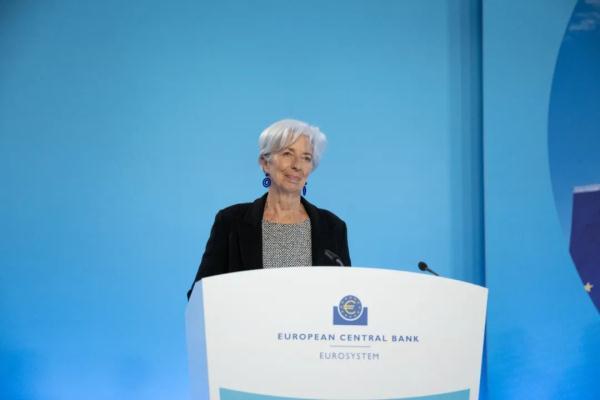
On May 4th, ECB President Lagarde delivered a speech at the ECB headquarters in Frankfurt. Photo courtesy of the European Central Bank (Xinhua News Agency)
Let’s take a look at the rhetoric of the hawkish members of the European Central Bank’s Governing Council.
Martins, governor of Latvia’s central bank, said that investors should not expect the European Central Bank to end this unprecedented interest rate hike cycle in July, as predicted by most economists, and that the financial market’s bet that the European Central Bank will cut interest rates next spring is "obviously too radical". On the contrary, he thinks it is necessary to raise interest rates further in order to curb inflation. Dutch central bank governor Klass also holds the same view. "Our real problem now is that the core inflation rate is still too high," he said. In the case that the potential inflation rate is too high, the European Central Bank needs to continue to raise interest rates and hope to reach the inflation target of 2% sometime in 2025. Casimir, governor of the Slovak Central Bank, said that the fight against inflation is "far from victory, and there are still many things to be solved", and interest rates should be kept at a high level for a long time.
In fact, among the 26 members of the European Central Bank’s management committee, most of them are consistent with the hawkish position of President Lagarde, that is, the European Central Bank will continue to raise interest rates. Interestingly, a recent survey of European economists shows that most respondents generally expect the European Central Bank to raise interest rates twice, each by 25 basis points, making the benchmark deposit interest rate reach the peak of 3.75% in July. The market is optimistic about the end of the central bank’s interest rate hike. The most important judgment is that the Fed has begun to change its interest rate policy and bet that it will start to cut interest rates in July.
It is true that the Fed’s every move affects the nerves of the market. According to the data released by the Bureau of Labor Statistics on May 10th, the consumer price index (CPI) in April rose by 4.9% year-on-year, the 10th consecutive decline, the smallest increase since April 2021. From this point of view, the inflationary pressure in the United States has eased and is in a downward channel. With the lag effect and cumulative effect of raising interest rates gradually emerging and the banking crisis in the United States becoming increasingly prominent, it is logical for the Federal Reserve to start adjusting its interest rate policy in order to promote a soft landing of the economy. Therefore, the market generally expects that the probability of the Fed’s meeting to suspend interest rate hikes in June is 90.4%, and the probability of interest rate cuts in July is 38.1%. The Federal Reserve is likely to suspend interest rate hikes before Europe, and the market expects the European Central Bank to follow suit.
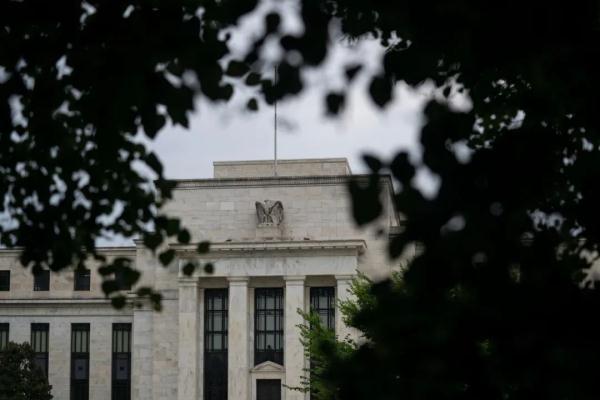
The Federal Reserve Building in Washington, USA. Photo by Liu Jie (Xinhua News Agency)
In this regard, Lagarde responded that the European Central Bank does not rely on the Federal Reserve in interest rate decision-making, and even if the Federal Reserve suspends interest rate hikes, the European Central Bank may continue to raise interest rates. At least from the current situation, the ECB’s monetary policy goal is still to curb inflation, and the interest rate hike cycle will continue until inflation is effectively controlled.
Look at the inflationary pressure in Europe. According to the data released by Eurostat on May 2, the harmonized CPI in the euro zone rose by 7% year-on-year in April, slightly higher than the 6.9% in March. In April, the core harmonized CPI rose by 5.6% year-on-year, down from 5.7% in March. Worst of all, food price inflation remains high, with an increase of 15.5% in March and 13.6% in April. In this regard, the European Central Bank’s judgment is that the overall inflation has declined, but the potential inflation is likely to rise significantly, and it will remain high in the next few months, mainly because of the sharp rise in energy costs. The European Central Bank will take any necessary action to achieve price stability and maintain financial stability.
At the same time, the economic performance in Europe is not optimistic. In the first quarter, the GDP of 20 euro-zone countries increased by 0.1% month-on-month, lower than the expected 0.2%. Germany, the locomotive of European economy, performed dismally. In the first quarter, German GDP shrank by 0.1% year-on-year, much lower than the growth of 0.8% in the fourth quarter of last year. The European Commission predicts that the euro zone economy will grow by 0.9% this year and 1.5% next year. Although it is possible to avoid economic recession, it still faces many challenges, especially the inflationary pressure.

In Berlin, Germany, consumers buy goods in the supermarket. Photo by Ren Pengfei (Xinhua News Agency)
For this reason, the European Central Bank is facing an arduous challenge, both to tighten monetary policy to control inflation and to try to avoid damaging the fragile economic recovery. In particular, the prospect of the conflict between Russia and Ukraine is unpredictable, which has brought a serious impact on European social economy. The soaring energy and commodity prices are reducing demand and restraining production, and at the same time, it has led to a sharp rise in food prices and a sharp increase in the cost of living for ordinary families in Europe. This is the main risk of potential inflation rising further, and it is also the main reason for the European Central Bank to strengthen its interest rate hike stance.
Looking into the future, the European Central Bank insists on the medium-term inflation target of 2%, but it can be expected to further slow down the rate hike. At the same time, in order to prevent economic recession, the European Central Bank will also introduce more flexible and effective supporting measures.
(Author Weng Donghui)
Source: Economic Daily
Reporting/feedback

关于作者