General situation analysis of China industry development: rising to the height of national strategy
In October 2019, the blockchain officially rose to the national strategic height; In April 2020, the National Development and Reform Commission included the "blockchain" in the scope of new infrastructure for the first time, and defined the information infrastructure to which it belongs.
With the promotion of national policies, basic technologies and increasing demand in downstream application fields, the market scale of China’s blockchain industry continues to develop, with high regional concentration and obvious industrial cluster effect.
With the increasing maturity of blockchain technology, the blockchain industry is in the stage of moving from 2.0 to 3.0, and it has a good performance in the fields of transportation, copyright protection and so on, which has made great contributions to promoting China’s digital construction and speeding up the process of digital China.
1. Panorama of blockchain industry: There are many application fields and good development prospects.
From the definition, blockchain is a kind of traceable chain data structure that combines the continuously generated information blocks in chronological order, and it is a distributed account book that cryptographically ensures that the data cannot be tampered with or forged.
Blockchain is an innovative application of asymmetric encryption algorithm, consensus mechanism, distributed storage, point-to-point transmission and other related technologies through new ways. The biggest advantage and direction of blockchain technology is "decentralization". By using cryptography, consensus mechanism, game theory and other technologies and methods, peer-to-peer transactions based on decentralized credit can be realized in distributed systems where network nodes do not need mutual trust.
From the perspective of industrial chain, China’s blockchain industry includes upstream hardware, technology and infrastructure; Mid-stream blockchain application and technical services; Downstream blockchain application fields and other links.
Upstream hardware, technology and infrastructure mainly provide necessary hardware, technology and infrastructure support for blockchain applications, among which hardware equipment includes mining machines, mining pools, chip manufacturers, etc. General technologies include distributed storage, decentralized transactions, data services, distributed computing and other related technologies.
The application and services of blockchain in the middle reaches include the construction of basic platforms and the provision of technical service support, among which the construction of basic platforms is divided into general basic chains and vertical basic chains; Technical service support includes technical support and service support. Technical support is similar to upstream related technologies, and it is responsible for providing buyers with a series of technical support based on blockchain products such as blockchain security protection; Service support includes a series of services such as digital asset trading place, digital asset storage and media community.
Downstream applications include the combination of blockchain technology and existing industries, mainly including financial industry, logistics industry, copyright protection, medical health, industrial energy and many other fields. As a new technology, blockchain has many downstream applications and great development potential.


The excellent characteristics of blockchain come from its unique technical foundation. A basic blockchain consists of at least three parts: data layer, network layer and consensus layer.
The data layer provides a unique data structure to ensure security, and uses asymmetric encryption, hash function, Merkel tree and other technologies to encrypt data to ensure data security and provide the basis for blockchain application; The network layer realizes the core idea of decentralization through P2P network. In BitTorrent network, each node is both the receiver and the sender of data. In the blockchain technology, the public key is similar to the seed. With the public key, you can have an identity to speak in the network.
At present, the consensus mechanisms mainly include PoW, PoS and DPoS. If you want to attack the blockchain, you must provide more computing power than Zhu Chain, and the gains are far less than the cost of the attack. The PoW consensus mechanism guarantees the security and decentralization of the system through computing power competition.

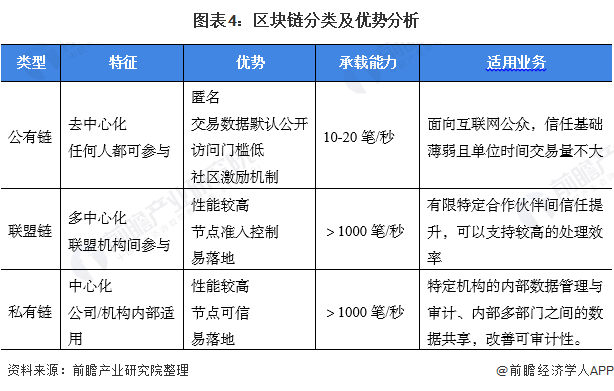
So far, blockchain is mainly divided into public chain, alliance chain and private chain based on the participation mode of various applications. The public chain is the earliest blockchain, and it is also the blockchain with the widest consensus at present. It refers to the blockchain that is completely decentralized and not controlled by any organization, such as the bitcoin blockchain. After the blockchain entered the 2.0 era, the public chain, the private chain and the alliance chain all began to enter the application scope of the blockchain. In the 3.0 era, more technologies such as cross-chain communication and multi-chain integration were applied.
2. favorable policies help industry norms and ecological applications to promote the blockchain industry.
Although the Chinese government is cautious about bitcoin and has shut down ICO and RMB bitcoin transactions one after another, it supports blockchain technology. During 2016-2019, the state continuously introduced various policies to support the development of blockchain industry and encouraged the application of blockchain technology in various industries.
Blockchain has been written into the "Thirteenth Five-Year Plan" as a technology. It is believed that there will be continuous policy support in the next 3-5 years, and frequent national policies have provided sufficient kinetic energy for the development of blockchain industry.

In the first half of 2020, the economic development of all provinces and cities suffered a certain degree of loss and destruction under the epidemic, but the blockchain technology, which played an important role during the epidemic, has attracted the attention of provincial and municipal governments because of its decentralization, openness, independence, security and anonymity. In the first half of 2020, representative regions increased their attention to the development of blockchain and issued special policies.

More than 30 provinces and cities across the country have issued policy guidance documents to carry out the layout of blockchain industry. By the end of 2019, 106 policies related to blockchain have been issued in various provinces and cities. From the perspective of regional distribution, Zhejiang Province issued the most policies, with 11 items, and Beijing and Guangdong both ranked second with 8 items. At present, most of the policies are issued in coastal and first-line areas, but it also reflects the trend that inland provinces and cities want to seize the development opportunities of blockchain.


In addition to the rapid development of the blockchain industry promoted by national policies, various industries have applied blockchain technology to form a new model, and the demand generated by combining with blockchain technology to form a new blockchain ecosystem is also the main driving force for the continuous development of the blockchain industry.
At present, the application of blockchain has extended from a single digital currency application to various fields of economy and society, such as financial industry, copyright protection, traceability anti-counterfeiting, energy industry, sharing economy, Internet of Things and many other fields.
— — Financial field: the most promising application.
Although in the long run, blockchain has application potential in many aspects. But in general, the application prospect of blockchain in the financial field is the best, and related technologies are also developing the fastest. Blockchain systematically solves the pain points and chronic diseases in the whole business chain for financial institutions, and its "systematicness" is mainly reflected in three aspects:
Blockchain technology can be applied to different banking businesses, from payment and settlement, to bill circulation and supply chain finance, to more complex securities issuance and trading, etc., and financial institutions and technology companies have been actively exploring and trying. The benefits brought by blockchain technology will benefit all transaction participants, including banks, bank customers and bank partners (such as platform enterprises).
At present, most of the pain points such as efficiency bottleneck, transaction delay, fraud and operational risk in each process of financial services are expected to be solved after the application of blockchain technology. For example, a large number of manual operations, manual verification and approval work in the existing process will be automated, paper contracts will be replaced by smart contracts, and losses will no longer occur due to system errors in transaction processing.
— — Copyright field: Blockchain technology solves copyright maintenance problems
With the development of the Internet, digital publishing has formed a relatively complete industrial chain, bringing considerable income to online writers and other related participants. On the other hand, infringement and piracy restrict the further development of digital publishing, and all participants suffer greatly. Although the state has issued various policies to solve the problem of copyright protection, it is difficult to fundamentally solve it because of technical means.
The mathematical principle of blockchain technology solves the problem of ownership confirmation in the transaction process, and the recording, transmission and storage results of value exchange activities are credible, which can completely solve the problem of copyright protection. Once the information recorded in the blockchain is generated, it will be permanently recorded and cannot be tampered with. Unless it has more than 51% of the total network power, it is possible to modify a newly generated blockchain record.

3. The scale of the blockchain industry in China has developed rapidly and entered the 3.0 era in an all-round way.
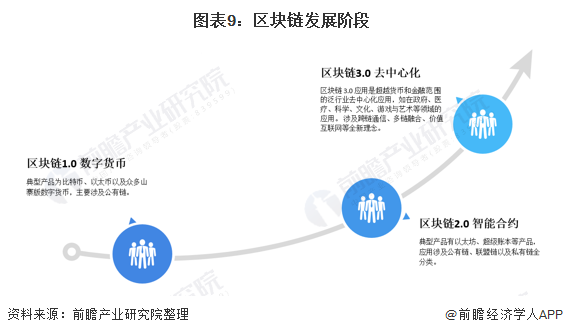
It has been more than ten years since the Bitcoin white paper published by Satoshi Nakamoto in 2008. In the ten years of blockchain technology development, the industry has roughly experienced three stages. According to the application scope and development stage, blockchain applications can be divided into blockchain 1.0, 2.0 and 3.0.
Among them: 1) Blockchain 1.0Support virtual currency applications, that is, cryptographic currency applications related to transfer, remittance and digital payment, in which Bitcoin is a typical application of blockchain 1.0;
2) Blockchain 2.0Support smart contract applications. Contracts are the basis of blockchain applications in the economic and financial fields. Blockchain 2.0 applications include stocks, bonds, futures, loans, mortgages, property rights, smart property and smart contracts. Ethereum and super ledger are typical applications of blockchain 2.0;
3) Application of Blockchain 3.0It is a pan-industry decentralized application beyond the scope of money and finance, such as in the fields of government, medical care, science, culture, games and art. With the continuous development of blockchain industry technology, the market size of blockchain industry is also growing rapidly. According to M&m statistics, it is estimated that in 2021, the global blockchain industry market size will reach 2.31 billion US dollars, with a compound annual growth rate of more than 80%.
China’s blockchain industry is still in its infancy, but with the continuous support of national policies, the continuous progress of industry technology and the increasing demand for downstream applications, China’s blockchain industry is expected to continue to maintain rapid growth. IDC predicts that in 2024, the overall expenditure scale of China blockchain market will reach 2.28 billion US dollars, with a compound annual growth rate of 51%.
According to the data released by CCID, since 2016, large IT Internet companies have laid out blockchains, start-ups have entered blowout mode, the frequency and amount of investment and financing have increased sharply, and the industrial scale has been expanding. As of December 2019, China has provided blockchain professional technical support, products, solutions and other services, and there are 1006 blockchain enterprises with input or output.

From the distribution of blockchain enterprises, they are mainly concentrated in four clusters: the Bohai Rim region dominated by Beijing and Shandong, the Yangtze River Delta cluster dominated by Shanghai and Zhejiang, the Pearl River Delta cluster dominated by Guangdong, and the Hunan, Guizhou and Chongqing clusters dominated by Chongqing and Sichuan.

4. Capital helps the development of the industry, and the financing fever has subsided.
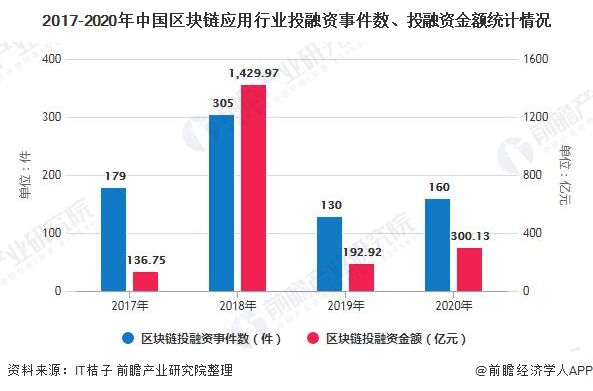
Specifically, according to IT Orange, in 2018, the investment and financing of the national blockchain application industry reached the highest level in the past four years, and the financing amount reached 142.997 billion yuan. In 2019, the capital side’s investment in blockchain companies gradually became rational, falling to 19.292 billion yuan, and steadily rising to 30.013 billion yuan in 2020. In general, blockchain investment tends to be rational.
5. Technology promotes the development of blockchain industry and the frontier layout of BAT enterprises.
Blockchain is an innovative application of asymmetric encryption algorithm, consensus mechanism, distributed storage, peer-to-peer transmission and other related technologies through new ways. It is a traceable chain data structure that combines continuously generated information blocks in a sequential manner, which is — A distributed account book that cryptographically ensures that data cannot be tampered with and forged.

As early as 2015, China’s Internet companies began to deploy in the blockchain field. Up to now, they have landed application scenarios in many fields. At present, three blockchain service platforms, Ant Chain, Tencent Blockchain TrustSQL and Baidu Hyperchain XUPER, have been launched.
According to the data published in the "Global Enterprise Blockchain Invention Patent Ranking in the First Half of 2020", the number of blockchain patents of Alibaba, Tencent and Baidu BAT enterprises in China ranked in the top ten in the first half of 2020, among which Alibaba ranked first with 1457 patents.

6. The blockchain will be widely deployed in the next three years and become an important support for building a digital China.
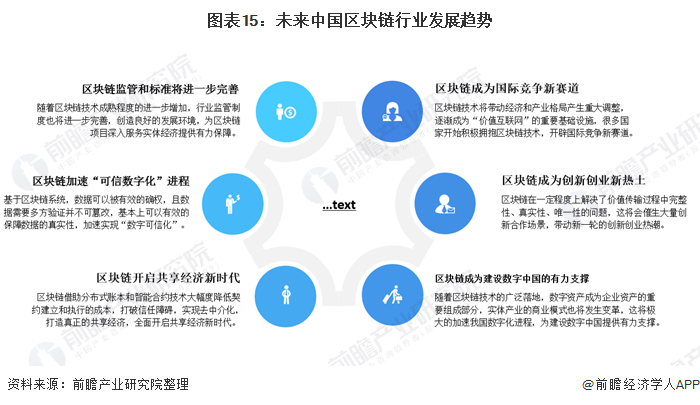
With the continuous development of China’s blockchain technology and the continuous expansion of blockchain application fields, China’s blockchain industry will present blockchain as the forefront of global technology development and open up a new track for international competition in the future;
The blockchain field has become a new hot spot for innovation and entrepreneurship, and technology integration will expand new application space;
The blockchain will be widely deployed in the real economy in the next three years and become an important support for the construction of digital China;
Blockchain creates a new platform economy and opens a new era of sharing economy;
Blockchain accelerates the process of "trusted digitalization" and drives finance to "get rid of virtual reality" to serve the real economy;
The blockchain supervision and standard system will be further improved, and the industrial development foundation will continue to consolidate the six development trends.
In October 2019, the blockchain officially rose to the national strategic height; In April 2020, the National Development and Reform Commission listed "blockchain" in the scope of new infrastructure for the first time, and made it clear that it belongs to the new technology infrastructure of the information infrastructure part of the new infrastructure.
This has brought opportunities to the blockchain market that is facing severe tests under the impact of the epidemic, and it has also given the blockchain a further development momentum in terms of technological development and industrial application.
For more data and analysis, please refer to Forward-looking Industry Research Institute, which provides solutions such as industrial big data, industrial planning, industrial declaration, industrial park planning, industrial investment attraction, IPO fundraising and feasibility study.

关于作者