At the beginning of last month, a chicken manager in Spain noticed an abnormal increase in the mortality rate of a cage in his farm, which led to the discovery of the bird flu epidemic. Subsequently, the Spanish Ministry of Agriculture had to order the culling of 600,000 laying hens in the farm.
The Daily Express reported that as of October 3rd, 79 cases of avian influenza were found among wild birds in Spain and 36 cases were found in poultry farms.
According to Sky News, the culling caused by bird flu has covered the whole of Europe, and it is also the largest bird flu epidemic in Europe’s history. Nearly 48 million birds have been culled.
The European Food Safety Agency (EFSA) warned that this highly contagious avian influenza virus usually disappears in summer, but it persists this year. Experts worry that it may infect humans and trigger another pandemic.
Just recently, Spain discovered the first case of human infection with avian influenza this year.
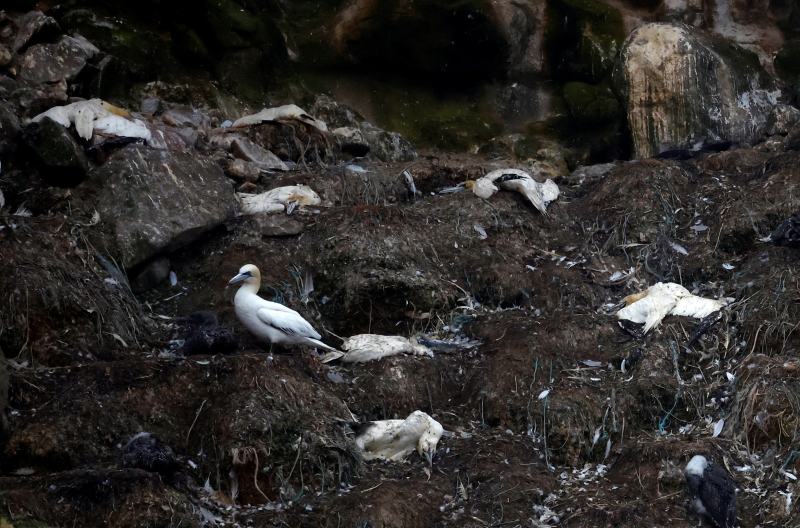
On September 5, 2022, local time, the tern died in the northern booby habitat on Rouzic Island in Brittany, France, which is a bird sanctuary affected by the severe epidemic of avian influenza. Figure /IC photo
Spain found the first case of human infection with avian influenza this year.
The European Center for Disease Control and Prevention (ECDC) once said that poultry farmers and people who handle dead birds, such as slaughterhouse workers, are considered as high-risk and susceptible people.
According to the British "Daily Express" report, at the end of September this year, employees of a poultry farm in Guadalajara, Spain, were found to be infected with bird flu. The infected person had no symptoms and was not infected with other viruses until the bird flu virus test was negative.
According to Spanish health authorities, this is the first case of human infection with bird flu in Spain this year, and it is also the second case of human infection with bird flu in Europe this year. It is understood that in January, the first case of human infection with avian influenza in Europe this year was detected in the UK.
According to the Daily Mail, at the end of 2021, Alan Gosling, a 79-year-old man from Devon, England, was also unfortunately infected with bird flu. Fortunately, he finally recovered completely, but he had to be culled after a group of ducks in his house were infected with the virus.
The European Center for Disease Control and Prevention warned that bird flu "may seriously affect public health". Influenza viruses in animal species can occasionally infect humans and may seriously affect public health, just like the H1N1 pandemic in 2009.
According to the report of the World Health Organization, from January 2003 to March 31, 2022, 863 cases of human infection with avian influenza A (H5N1) virus have been reported in 18 countries and regions, including 455 deaths.
Andrea Amon, director of the European Center for Disease Control and Prevention, pointed out in a statement: "It is essential that clinicians, experts in laboratories and health experts in the animal and human fields cooperate and maintain a coordinated approach." Amon stressed that it is necessary to keep monitoring in order to find influenza virus infection "as soon as possible" and carry out risk assessment and public health actions.
The European Center for Disease Control and Prevention also emphasized the importance of safety and hygiene measures in work where contact with animals is unavoidable.
It affected 37 countries and was the largest outbreak of avian influenza in Europe.
According to a research report recently published by the European Center for Disease Control and Prevention, from June to August 2022, the highly pathogenic avian influenza virus detected in wild birds in EU countries reached an unprecedented high level.
According to the Daily Mail, 1,727 cases of avian influenza were detected among wild birds in Britain, which were distributed in 406 locations and involved 59 species of birds.
Dr Christine Middlemiss, the UK’s chief veterinary officer, said that the risk of bird flu infection in wild birds was increasing.
She said: "Unfortunately, as migratory birds return to the UK, we expect that the number of bird flu cases will continue to rise in the coming months, which will bring further disease risks, and these diseases may spread to our chickens."
According to the WHO report, compared with the same period in 2021, the number of infections in poultry farms from June to September this year was five times that of last year, during which 1.9 million farm poultry were culled.

On September 7, 2022, local time, hundreds of seabirds were washed up on the coast of Cornwall due to the outbreak of bird flu in Britain. Figure /IC photo
The breeding grounds of seabirds along the Atlantic coast are particularly affected. Wild birds, especially terns and seagulls, have died in large numbers because of bird flu. At the same time, a large number of cases of avian influenza infection have been found in captive birds. From October 2021 to September 2022, 161 cases of highly pathogenic avian influenza (HPAI) were known, compared with 26 cases from 2020 to 2021.
The European Food Safety Agency, the European Center for Disease Control and Prevention and the European Union Avian Influenza Reference Laboratory told Reuters that "the geographical scope of the epidemic is unprecedented".
According to Reuters, the epidemic affected 37 countries in Europe, from Svalbard to Ukraine, the largest geographical area on record.
This is also the first time that the virus has crossed the Atlantic along the migration route, and it has also caused serious poultry bird flu epidemics in several provinces in Canada and several States in the United States.
The bird flu crisis may affect the supply of eggs and Christmas turkeys.
Not only in Europe, Reuters previously reported that according to the data estimated by the US federal and local governments, commercial farms in the United States broke out the worst bird flu epidemic since 2015 this year, losing more than 19 million laying hens, accounting for about 6% of the total number of chickens. According to the Associated Press, bird flu outbreaks have occurred in 24 states in the United States this year, affecting chickens, ducks and turkeys.
It is understood that France is the largest supplier of eggs in the European Union, and now it is experiencing the worst bird flu epidemic, with about 8% of laying hens being culled.
Some industry analysts said that when the bird flu epidemic broke out in the United States in 2015, the number of eggs imported from European countries such as France, Italy and Spain increased, and now import is no longer an option for increasing supply.
"The overall shortage of eggs is becoming a global problem … Unfortunately, everyone is facing a shortage of supply now," said a reporter who tracks the egg market in the United States.
On the other hand, the British people began to worry about the shortage of turkeys this Christmas, and Britain had to cull 3 million turkeys because of bird flu.
At present, bird flu has been found in 155 places in Britain. DEFRA has set up bird flu prevention areas in Norfolk, Suffolk, Essex and the whole southwest of England to stop the spread of the disease.
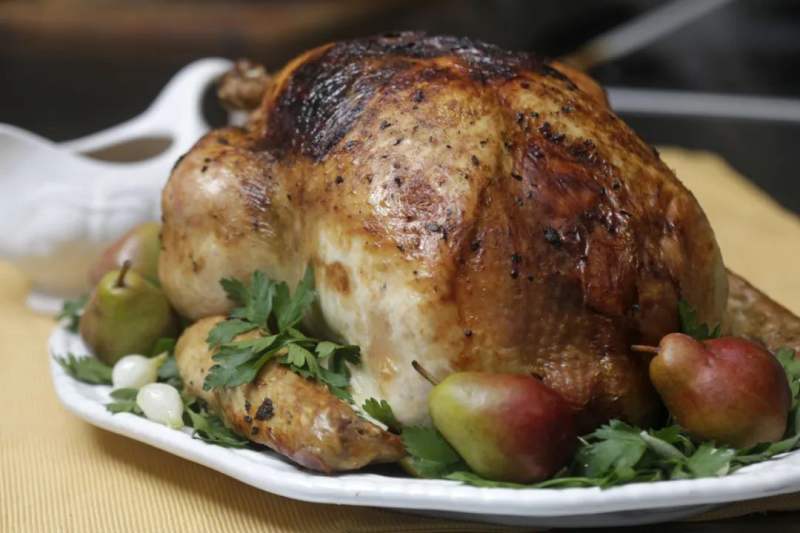
Turkey is the traditional main course of Thanksgiving in the West. Figure /IC photo
According to the Daily Mail, James Mottershead, chairman of the Poultry Committee of the British National Farmers’ Union, said that this bird flu may cause a "massacre" of turkeys during the festival.
Motside said: "If turkeys are infected with bird flu, they will be severely culled, which may cause real supply chain problems before Christmas." He added, "I know some examples of seasonal turkey producers being affected."
Motside said that farms that broke out bird flu and were listed as infected places may stop raising poultry for up to a year.
The National Farmers’ Union warned that if the worst bird flu epidemic in British history continues to spread, the supply of Christmas turkey may be at risk.
In addition to turkeys, other species such as ducks are also at risk. James Coleman, a poultry farmer who runs Creedy Carver Farm in Devon, England, had to cull 20,000 ducks. He told Sky News: "At present, everyone in the industry is on tenterhooks."
The Department of Environment, Food and Rural Affairs said that officials were working hard to "eradicate the disease as soon as possible".
The European Food Safety Agency suggested that risk mitigation and monitoring strategies should be implemented quickly in order to find the virus early.
Beijing News reporter Yao Yuan
Editor Liu Mengjie proofreads Wu Xingfa.

关于作者